

Checked for clinical accuracy on 4 July 2026. Next review due July 2027. This article is general information and is not a substitute for advice about your own situation.
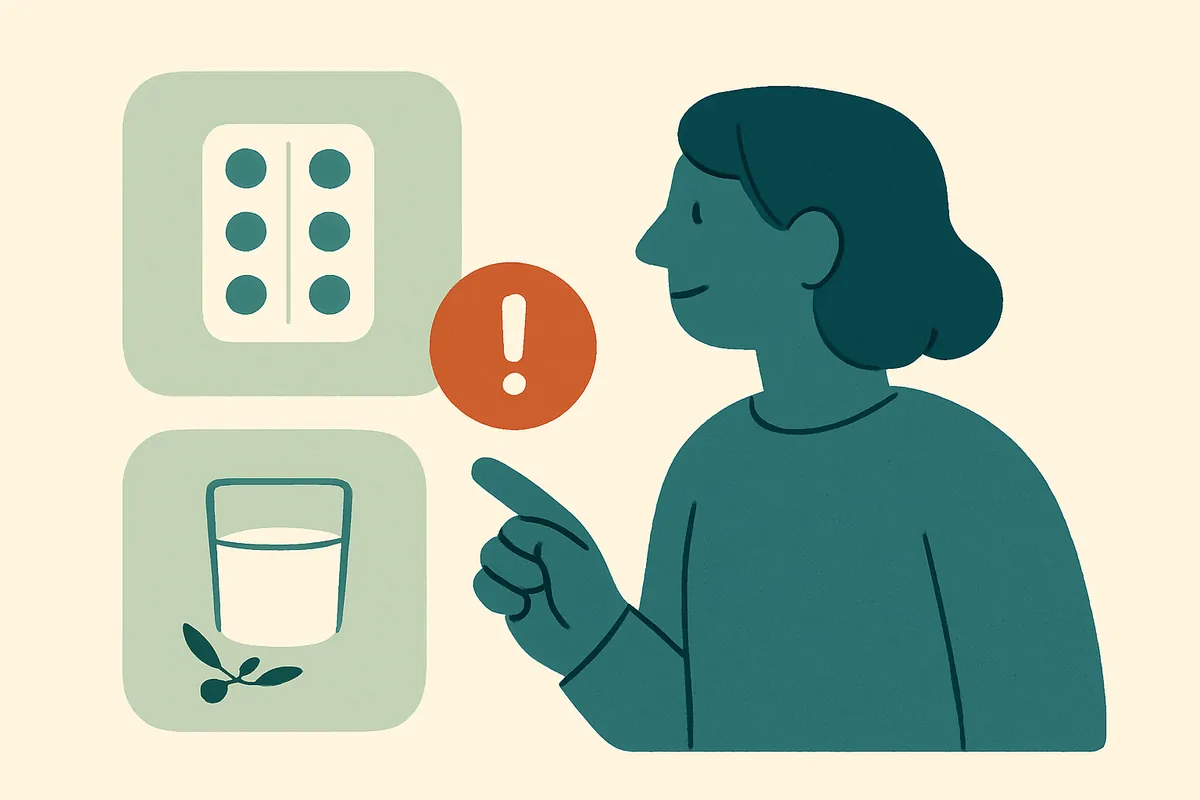
Diazepam and alcohol should never be combined. Both are central nervous system depressants acting on the GABA-A receptor system, so together they can slow or stop breathing, which is a medical emergency. The NHS advises against drinking any alcohol while taking diazepam, and there is no threshold below which the risk disappears. If someone who has taken both cannot be woken or is breathing slowly, call 999 immediately.
Before you go further, a safety note
If you are physically dependent on alcohol or on benzodiazepines such as diazepam or alprazolam, do not stop taking them suddenly. Sudden withdrawal from either can cause seizures and can be life threatening. A medically supervised withdrawal is the safe route, and your GP can arrange one.
In an emergency call 999 in the UK, or 112 anywhere in Europe. For urgent advice that is not an emergency, NHS 111 is available in England around the clock.
Clinical sign-off required before publication. This article describes how a prescription medicine interacts with alcohol. It must not go live until a named clinician has reviewed it and the review date is recorded.
They cannot be woken, or are extremely difficult to rouse Their breathing has become slow, shallow, or irregular Their lips, fingertips, or skin appear blue or grey (cyanosis) They are unresponsive to voice or physical stimulation They are vomiting and cannot protect their own airway While waiting for the ambulance, place the person in the recovery position (on their side, with their head tilted back slightly to keep the airway open). Stay with them and monitor their breathing. Tell the emergency responders exactly what has been taken, how much, and when. This information directly affects the treatment they will receive. The NHS diazepam side effects page lists "difficulty breathing (slower, more shallow breaths)" as a serious side effect that requires urgent medical attention. Do not underestimate this sign. It is not something to sleep off. Is Any Amount of Alcohol Safe With Diazepam?The clinical guidance does not distinguish between "a small amount" and "a large amount" when it comes to this combination. Both the NHS and the SmPC say: do not drink alcohol while taking diazepam. There is no threshold below which the risk disappears. This matters because the question "can I have just one drink?" comes up frequently among people prescribed diazepam. The honest answer is that the unpredictability of the interaction makes any amount inadvisable. Several factors affect how sedated a person becomes when they combine even modest alcohol use with a therapeutic diazepam dose: Their body weight and general health Whether they have eaten recently Their current liver function (which processes both) Whether they are on other medicines that also affect the CNS Their age (older adults metabolise both more slowly) Their tolerance level to diazepam and alcohol individually Because these variables cannot be controlled, the interaction cannot be predicted with precision. A person who feels capable of "handling" both may have dangerously impaired breathing that they are unable to perceive or respond to. This is part of what makes CNS depression so clinically serious: the person losing consciousness may be the last person in the room to recognise the danger. Dependence on Diazepam, Dependence on Alcohol: A Complex PictureBoth diazepam and alcohol produce physical dependence through the same GABA-A mechanism. The body adapts to the presence of a substance that suppresses neuronal activity by becoming more excitable in its absence, a process called neuroadaptation. When either substance is removed suddenly after prolonged use, that rebound excitability can produce withdrawal symptoms that range from anxiety and sleeplessness to tremors, perceptual disturbances, and seizures. The SmPC for diazepam states plainly: "Prolonged use of this product may lead to drug dependence and addiction but can occur with short-term use at recommended therapeutic doses." The NHS adds that diazepam should be used for no longer than four weeks. People who develop dependence on both diazepam and alcohol face a medically complex situation. Cross-tolerance exists between the two substances: someone who uses alcohol heavily may find that therapeutic doses of diazepam have less effect, because the nervous system has already adapted to chronic GABA-A enhancement (StatPearls, NIH). Conversely, a person who has been taking higher doses of diazepam may underestimate how much alcohol is affecting their breathing and coordination, because they have lost the normal internal reference point. Stopping both substances simultaneously, or stopping either abruptly without medical support, carries a significant risk of withdrawal seizures. This is not a situation that responds safely to willpower alone. ONS data shows that 509 benzodiazepine-related deaths were registered in England and Wales in 2022, the second highest annual total in almost 30 years, frequently involving polydrug use. Dual dependence on benzodiazepines and alcohol is one of the most clinically challenging patterns to treat, and one of the most dangerous to leave unmanaged. If you recognise this pattern in yourself or someone close to you, please speak to a doctor before making any changes to what you are taking. Medical guidance is not optional here, it is what keeps withdrawal safe. Why Some People Combine Diazepam and Alcohol AnywayUnderstanding why people combine these substances is not the same as endorsing it. It is, however, part of honest, non-judgemental care. Some people discover that alcohol intensifies the sedative and anxiolytic effect of diazepam, producing a short-term feeling of calm that neither substance achieves alone. Some are prescribed diazepam for anxiety or sleep but find that the dose no longer works as well as it did, because tolerance has developed, and use alcohol to fill the gap. Some have been using alcohol for years as a way to manage anxiety, receive a diazepam prescription, and find the combination more powerful than they expected. In each of these patterns, what often starts as a response to a genuine problem, anxiety, insomnia, emotional distress, becomes a cycle of escalating use. As tolerance to each substance grows, more of both is needed to achieve the same relief. The gap between "what I am taking" and "what is physiologically dangerous" narrows without the person always being aware of it. The experience of being unable to stop, despite wanting to, despite knowing the risks, is one of the indicators of an alcohol addiction or a benzodiazepine dependence that has moved beyond habit into physical need. That experience is not a character failing. It is how these substances work on the brain. Getting Help: Why Medical Supervision MattersIf you are concerned about your use of diazepam, alcohol, or both, the most important thing to understand is this: stopping either substance abruptly when you are physically dependent is medically dangerous. It must not be attempted without medical guidance. There is an important distinction to understand here. Diazepam is itself used as part of clinically supervised alcohol detox programmes, precisely because it manages the rebound excitability of the nervous system that makes alcohol withdrawal potentially fatal. This clinical application, under close medical supervision, is entirely different from recreational co-use. The mechanism that makes diazepam useful in supervised alcohol withdrawal is the same mechanism that makes unsupervised combination use so dangerous, and it is the same reason that dual dependence requires professionally managed detox rather than self-managed stopping. Sierra Recovery is a small private residential clinic in the mountains of inland Andalucía, backed by PROMIS Clinics in the UK. We arrange medically supervised detox before admission and residential treatment for people who are dependent on benzodiazepines, alcohol, or both. Where a medically supervised detox is needed, it is completed in hospital before you arrive. Sierra Recovery is a residential rehabilitation centre, not a detox unit. Where a medically supervised detox is needed, it is completed in hospital before you arrive. Sierra Recovery is a residential rehabilitation centre, not a detox unit. Dual dependence, on both alcohol and benzodiazepines, is something our team has experience with. The programme is individualised, the team is English-speaking, and aftercare, including in-person sessions through PROMIS Clinics' London facility, continues after you leave Spain. Our residential treatment programme follows medical detox with evidence-based therapy to address the reasons both substances became so necessary in the first place. Treatment abroad is not the right choice for everyone. But for many people in the UK, the combination of a clinical standard equivalent to UK private care, a setting that offers genuine distance from a familiar environment, and a cost that is typically more accessible than UK private residential treatment makes it a serious option. Concerned about diazepam, alcohol, or both? Talk to our team in confidence. Our clinical team answers questions about benzodiazepine and alcohol treatment honestly, in English. PROMIS Clinics-backed care, residential programme in Andalucía, London-based aftercare. English-speaking team. No obligation. Sources NHS. "About diazepam." https://www.nhs.uk/medicines/diazepam/about-diazepam/ NHS. "Side effects of diazepam." https://www.nhs.uk/medicines/diazepam/side-effects-of-diazepam/ medicines.org.uk. "Diazepam 5mg Tablet, Summary of Product Characteristics (SmPC)." https://www.medicines.org.uk/emc/product/101912/smpc StatPearls (NCBI Bookshelf, NIH). "Diazepam." https://www.ncbi.nlm.nih.gov/books/NBK537022/ NHS inform. "Benzodiazepines (benzos, diazepam, valium)." https://www.nhsinform.scot/healthy-living/drugs-and-drug-use/common-drugs/benzodiazepines-benzos-diazepam-valium/ Office for National Statistics. "Deaths related to drug poisoning in England and Wales: 2022 registrations." https://www.ons.gov.uk/peoplepopulationandcommunity/birthsdeathsandmarriages/deaths/bulletins/deathsrelatedtodrugpoisoninginenglandandwales/2022registrations
Combination Is Dangerous
Diazepam and alcohol must never be combined. Both are central nervous system depressants, and taking them together can slow or stop breathing, which is a medical emergency. The NHS advises that you should not drink alcohol while taking diazepam because it significantly increases the risk of serious side effects. This is not a precaution that can be set aside after a careful cost-benefit calculation. It is a clear clinical warning based on how both substances act on the brain. This article explains why the combination is dangerous, what to do in an emergency, and what support exists if diazepam or alcohol, or both, have become difficult to manage.
What Diazepam Is and How It Works
Diazepam is a benzodiazepine, a class of medicines that work by enhancing the activity of a chemical messenger in the brain called gamma-aminobutyric acid, or GABA. GABA is the brain's main inhibitory neurotransmitter: when it binds to its receptors, it reduces the firing rate of neurons, producing effects that include sedation, reduced anxiety, muscle relaxation, and the raising of the seizure threshold. The official Summary of Product Characteristics (SmPC) for Diazepam 5mg lists its licensed uses as the short-term relief of severe, disabling anxiety, the management of acute alcohol withdrawal, sedation before medical procedures, and the treatment of seizures and muscle spasms. Diazepam is intended for short-term use only, as tolerance and dependence can develop within weeks. Understanding what diazepam does to the brain is essential context for understanding why alcohol makes it so much more dangerous.
How Alcohol and Diazepam Affect the Same Brain System
The reason this combination is medically serious comes down to neuroscience. Both diazepam and alcohol enhance the GABA-A receptor system, reducing brain activity and slowing down the central nervous system. They work at the same receptor, but by different mechanisms, and their effects on CNS depression are additive and potentially synergistic, meaning the combined effect on sedation, breathing, and consciousness can be greater than the sum of the two substances individually. According to the StatPearls diazepam reference on the NIH NCBI Bookshelf, diazepam attaches to GABA-A receptors in the brain and amplifies their activity, causing brain cells to fire less frequently and become less excitable. Alcohol has overlapping effects on the same receptor family. When both are present simultaneously, the suppression of neuronal activity is significantly increased. The SmPC for diazepam makes this explicit in Section 4.5 (Drug Interactions): "Diazepam should not be used together with alcohol (CNS inhibition enhanced sedative effects: impaired ability to drive/operate machinery)." The classification is "not recommended", the highest practical warning short of an absolute contraindication.
Why the Combination Can Be Fatal
The most serious risk from combining diazepam and alcohol is respiratory depression. This is the clinical term for breathing that becomes progressively slower and shallower until it stops. In a healthy adult, a diazepam overdose alone is rarely fatal because the brain's respiratory drive tends to compensate. Alcohol alone is capable of causing respiratory depression at very high levels. When both substances are present together, the threshold at which breathing becomes dangerously suppressed is far lower. The central control of respiration, located in the brainstem, is suppressed by both simultaneously, and combining diazepam with alcohol greatly increases the risk of severe respiratory depression, coma and death. The progression is often described as a spectrum. Extreme drowsiness comes first, followed by confusion, loss of coordination, and an inability to be woken. As respiratory rate falls, oxygen levels in the blood drop. Without emergency intervention, the person can pass into unconsciousness, enter a coma, and die. NHS inform describes the risk clearly: "mixing benzodiazepines with other depressant drugs like alcohol can pose serious health risks, as all of these drugs can depress breathing, resulting in an increased risk of overdose or death if mixed." The SmPC for diazepam lists "acute pulmonary insufficiency" and "respiratory depression" as absolute contraindications. Combining the drug with alcohol in a person who is already affected by its sedative properties is precisely the scenario that makes these contraindications clinically relevant.

Is someone you love using benzodiazepines?
Families are usually the first to see it and the last to be asked. Talk to a clinician about what you are seeing, in confidence and with no obligation.
Emergency Signs: When to Call 999
If you are with someone who has mixed diazepam and alcohol, and you observe any of the following, call 999 immediately. Do not wait to see if they improve. Do not attempt to manage this at home. Emergency signs requiring 999:
- They cannot be woken, or are extremely difficult to rouse
- Their breathing has become slow, shallow, or irregular
- Their lips, fingertips, or skin appear blue or grey (cyanosis)
- They are unresponsive to voice or physical stimulation
- They are vomiting and cannot protect their own airway While waiting for the ambulance, place the person in the recovery position (on their side, with their head tilted back slightly to keep the airway open). Stay with them and monitor their breathing. Tell the emergency responders exactly what has been taken, how much, and when. This information directly affects the treatment they will receive. The NHS diazepam side effects page lists "difficulty breathing (slower, more shallow breaths)" as a serious side effect that requires urgent medical attention. Do not underestimate this sign. It is not something to sleep off.
Is Any Amount of Alcohol Safe With Diazepam?
The clinical guidance does not distinguish between "a small amount" and "a large amount" when it comes to this combination. Both the NHS and the SmPC say: do not drink alcohol while taking diazepam. There is no threshold below which the risk disappears. This matters because the question "can I have just one drink?" comes up frequently among people prescribed diazepam. The honest answer is that the unpredictability of the interaction makes any amount inadvisable. Several factors affect how sedated a person becomes when they combine even modest alcohol use with a therapeutic diazepam dose: - Their body weight and general health - Whether they have eaten recently - Their current liver function (which processes both) - Whether they are on other medicines that also affect the CNS - Their age (older adults metabolise both more slowly) - Their tolerance level to diazepam and alcohol individually Because these variables cannot be controlled, the interaction cannot be predicted with precision. A person who feels capable of "handling" both may have dangerously impaired breathing that they are unable to perceive or respond to. This is part of what makes CNS depression so clinically serious: the person losing consciousness may be the last person in the room to recognise the danger.
Dependence on Diazepam, Dependence on Alcohol: A Complex Picture
Both diazepam and alcohol produce physical dependence through the same GABA-A mechanism. The body adapts to the presence of a substance that suppresses neuronal activity by becoming more excitable in its absence, a process called neuroadaptation. When either substance is removed suddenly after prolonged use, that rebound excitability can produce withdrawal symptoms that range from anxiety and sleeplessness to tremors, perceptual disturbances, and seizures. The SmPC for diazepam states plainly: "Prolonged use of this product may lead to drug dependence and addiction but can occur with short-term use at recommended therapeutic doses." The NHS adds that diazepam should be used for no longer than four weeks. People who develop dependence on both diazepam and alcohol face a medically complex situation. Cross-tolerance exists between the two substances: someone who uses alcohol heavily may find that therapeutic doses of diazepam have less effect, because the nervous system has already adapted to chronic GABA-A enhancement (StatPearls, NIH). Conversely, a person who has been taking higher doses of diazepam may underestimate how much alcohol is affecting their breathing and coordination, because they have lost the normal internal reference point. Stopping both substances simultaneously, or stopping either abruptly without medical support, carries a significant risk of withdrawal seizures. This is not a situation that responds safely to willpower alone. ONS data shows that 509 benzodiazepine-related deaths were registered in England and Wales in 2022, the second highest annual total in almost 30 years, frequently involving polydrug use. Dual dependence on benzodiazepines and alcohol is one of the most clinically challenging patterns to treat, and one of the most dangerous to leave unmanaged. If you recognise this pattern in yourself or someone close to you, please speak to a doctor before making any changes to what you are taking. Medical guidance is not optional here, it is what keeps withdrawal safe.

Talk to a clinician today
You will speak to our admissions team, all of them clinicians. Confidential, no obligation, and we will tell you honestly whether our programme fits.
Why Some People Combine Diazepam and Alcohol Anyway
Understanding why people combine these substances is not the same as endorsing it. It is, however, part of honest, non-judgemental care. Some people discover that alcohol intensifies the sedative and anxiolytic effect of diazepam, producing a short-term feeling of calm that neither substance achieves alone. Some are prescribed diazepam for anxiety or sleep but find that the dose no longer works as well as it did, because tolerance has developed, and use alcohol to fill the gap. Some have been using alcohol for years as a way to manage anxiety, receive a diazepam prescription, and find the combination more powerful than they expected. In each of these patterns, what often starts as a response to a genuine problem, anxiety, insomnia, emotional distress, becomes a cycle of escalating use. As tolerance to each substance grows, more of both is needed to achieve the same relief. The gap between "what I am taking" and "what is physiologically dangerous" narrows without the person always being aware of it. The experience of being unable to stop, despite wanting to, despite knowing the risks, is one of the indicators of an alcohol addiction or a benzodiazepine dependence that has moved beyond habit into physical need. That experience is not a character failing. It is how these substances work on the brain.
Getting Help: Why Medical Supervision Matters
If you are concerned about your use of diazepam, alcohol, or both, the most important thing to understand is this: stopping either substance abruptly when you are physically dependent is medically dangerous. It must not be attempted without medical guidance. There is an important distinction to understand here. Diazepam is itself used as part of clinically supervised alcohol detox programmes, precisely because it manages the rebound excitability of the nervous system that makes alcohol withdrawal potentially fatal. This clinical application, under close medical supervision, is entirely different from recreational co-use. The mechanism that makes diazepam useful in supervised alcohol withdrawal is the same mechanism that makes unsupervised combination use so dangerous, and it is the same reason that dual dependence requires professionally managed detox rather than self-managed stopping. Sierra Recovery is a small private residential clinic in the mountains of inland Andalucía, backed by PROMIS Clinics in the UK. We arrange medically supervised detox before admission and residential treatment for people who are dependent on benzodiazepines, alcohol, or both. Where a medically supervised detox is needed, it is completed in hospital before you arrive. Sierra Recovery is a residential rehabilitation centre, not a detox unit. Where a medically supervised detox is needed, it is completed in hospital before you arrive. Sierra Recovery is a residential rehabilitation centre, not a detox unit. Dual dependence, on both alcohol and benzodiazepines, is something our team has experience with. The programme is individualised, the team is English-speaking, and aftercare, including in-person sessions through PROMIS Clinics' London facility, continues after you leave Spain. Our residential treatment programme follows medical detox with evidence-based therapy to address the reasons both substances became so necessary in the first place. Treatment abroad is not the right choice for everyone. But for many people in the UK, the combination of a clinical standard equivalent to UK private care, a setting that offers genuine distance from a familiar environment, and a cost that is typically more accessible than UK private residential treatment makes it a serious option. Concerned about diazepam, alcohol, or both? Talk to our team in confidence. Our clinical team answers questions about benzodiazepine and alcohol treatment honestly, in English. PROMIS Clinics-backed care, residential programme in Andalucía, London-based aftercare. English-speaking team. No obligation.
Sources
- NHS. "About diazepam." https://www.nhs.uk/medicines/diazepam/about-diazepam/
- NHS. "Side effects of diazepam." https://www.nhs.uk/medicines/diazepam/side-effects-of-diazepam/
- medicines.org.uk. "Diazepam 5mg Tablet, Summary of Product Characteristics (SmPC)." https://www.medicines.org.uk/emc/product/101912/smpc
- StatPearls (NCBI Bookshelf, NIH). "Diazepam." https://www.ncbi.nlm.nih.gov/books/NBK537022/
- NHS inform. "Benzodiazepines (benzos, diazepam, valium)." https://www.nhsinform.scot/healthy-living/drugs-and-drug-use/common-drugs/benzodiazepines-benzos-diazepam-valium/
- Office for National Statistics. "Deaths related to drug poisoning in England and Wales: 2022 registrations." https://www.ons.gov.uk/peoplepopulationandcommunity/birthsdeathsandmarriages/deaths/bulletins/deathsrelatedtodrugpoisoninginenglandandwales/2022registrations
Last reviewed 2026-07-25. Next review 2027-07-25.
Questions people actually ask
Can I have one drink while taking diazepam?
The NHS and the official prescribing information for diazepam both advise against drinking any alcohol while taking it. The concern is not just about feeling more sedated. Alcohol enhances the CNS depressant effect of diazepam at the same brain receptor, and even a single drink can amplify sedation, impair coordination, and reduce respiratory drive in ways that are difficult to predict. There is no clinically established threshold below which the combination is considered safe.
What happens if you mix diazepam and alcohol?
Combining diazepam and alcohol produces an amplified CNS depressant effect. The person may feel far more sedated, drowsy, or confused than either substance would cause alone. Coordination is impaired, reaction time slows, and the ability to make judgements is reduced. In more serious cases, breathing can become slow and shallow, the person may lose consciousness, and without emergency intervention, the outcome can be fatal. The risk is higher with larger amounts of either substance and in people with lower tolerance or underlying health conditions.
How long after taking diazepam can I drink alcohol?
Diazepam has a long half-life, it stays in the body for an extended period, and its active metabolites (which have sedative effects of their own) remain active even longer. The NHS does not give a specific "safe window" because the duration varies significantly by person, dose, and whether regular use has built up in the body. As a general principle, if you have been prescribed diazepam and have concerns about alcohol, speak to your GP or pharmacist rather than making a personal judgement about when it is safe to drink. Do not assume the effects have worn off.
Can you die from mixing diazepam and alcohol?
Yes. The combination can be fatal. Both diazepam and alcohol suppress the brain's control of breathing, and combining them can reduce respiratory function to the point where breathing stops. Diazepam overdose alone is rarely fatal in otherwise healthy adults, but combining diazepam with alcohol greatly increases the risk of severe respiratory depression, coma and death. Office for National Statistics data records hundreds of benzodiazepine-involved deaths annually in England and Wales, and polydrug use, frequently including alcohol, is a consistent pattern in these cases. If someone has taken diazepam and alcohol together and cannot be woken, call 999 immediately.
What are the signs of a diazepam and alcohol overdose?
Key signs include: extreme drowsiness or inability to be woken, slow or stopped breathing, blue or grey lips and fingertips, confusion or incoherence, vomiting while unconscious, and unresponsiveness to voice or touch. These are medical emergencies. Call 999 immediately and place the person in the recovery position while waiting for help. Tell the emergency services exactly what has been taken, when, and in what quantity.
Can you become addicted to both diazepam and alcohol?
Yes. Both substances produce physical dependence through the same neurological mechanism, enhancement of GABA-A receptor activity, and the body can become dependent on both simultaneously. This dual dependence is clinically complex and more difficult to treat than dependence on either substance alone. People who are dependent on both face a higher risk of severe withdrawal, including seizures, if either substance is stopped abruptly. Medical supervision of detox is essential in this situation and is not optional.
What should I do if I am dependent on both diazepam and alcohol?
Speak to a doctor as soon as possible, and do not stop taking either substance abruptly without medical guidance. Sudden withdrawal from diazepam or alcohol, when the body is physically dependent, carries a risk of seizures and is medically dangerous. A GP can refer you to an appropriate service, or a specialist residential programme can provide medically supervised detox for both. This is a serious situation that deserves proper clinical support, not managed alone. Asking for help is the right and the safe next step.
What is diazepam and what is it prescribed for?
Diazepam is a benzodiazepine. It works by enhancing gamma-aminobutyric acid, or GABA, the brain's main inhibitory neurotransmitter, which reduces how often neurons fire. That produces sedation, reduced anxiety, muscle relaxation and a raised seizure threshold. Its licensed uses include short-term relief of severe, disabling anxiety, management of acute alcohol withdrawal, sedation before medical procedures, and treatment of seizures and muscle spasms.
How long should diazepam be taken for?
Diazepam is intended for short-term use only. The NHS advises that it should be used for no longer than four weeks, because tolerance and dependence can develop within weeks. The official prescribing information states that prolonged use may lead to drug dependence and addiction, and that this can also occur with short-term use at recommended therapeutic doses. Any change to what you take should be discussed with a doctor.
Diazepam is used in alcohol detox, so why is combining it with alcohol dangerous?
The two situations are not the same. In a clinically supervised alcohol detox, diazepam is prescribed and monitored to manage the rebound excitability of the nervous system that makes alcohol withdrawal potentially fatal. Recreational co-use has none of that oversight. The very mechanism that makes diazepam useful in supervised withdrawal is what makes unsupervised combination use so risky, which is why dual dependence needs professionally managed detox.
What is cross-tolerance between alcohol and diazepam?
Cross-tolerance means the nervous system has already adapted to one substance in a way that changes how it responds to the other. Someone who drinks heavily may find therapeutic doses of diazepam have less effect, because the GABA-A system has adapted. In the other direction, a person taking higher doses of diazepam may underestimate how much alcohol is affecting their breathing and coordination, having lost their normal internal reference point.
 +
+
Talk to a clinician today
You will speak to our admissions team, English-speaking clinicians who know the programme and the people in it. Callback within 24 hours.
Registered health centre. Authorised by the Junta de Andalucía, N.I.C.A. 67331.