
Home / Guides / How to choose a rehab in Spain
Choosing a centre
How to Choose a Rehab in Spain: An Independent Guide for UK Families
How to choose a rehab in Spain comes down to one discipline: verify, do not trust. Every healthcare centre in Spain must hold an authorisation from the health authority of the region it sits in, and that authorisation appears on a public register you can search from the UK. Check the authorisation, the centre type, the clinicians' registrations and a written quotation before you pay anything.
Almost every page on this subject was published by someone with a financial interest in your answer. So was this one. A criterion you cannot check only helps the seller, so every test below comes with a way to run it.
By the end you can look up a Spanish centre's health authorisation, read what it is licensed to be, and check the people who would treat your relative. A good centre other than the publisher passes every test here.
What health authorisation actually proves in Spain, and what it does not
Every healthcare centre in Spain must hold an authorisation from the health authority of the autonomous community it sits in. That requirement, and the classification of centre types behind it, comes from Real Decreto 1277/2003. Regional decisions are compiled into a national register the Ministry of Health describes as public and informative.
An authorisation is permission to operate as a particular type of centre, granted against legal and safety requirements. It is not a quality rating. Nobody has scored the therapy.
British readers arrive with a two-tier model: registration with one body, ratings published by another. Spain is built differently. The instruments that govern it, including the Junta de Andalucía's description of its regional register, speak of authorisation and registration rather than inspection ratings, and there is no national publication of quality scores to compare centres with.
The nearest independent signal may be voluntary international accreditation, bought rather than imposed. Some accreditation programmes cover addiction treatment specifically, although they are not a Spanish equivalent of CQC ratings.
Authorisation is the floor, not the ceiling. An absence, or a mismatch between what is authorised and what is being sold, is disqualifying.
| What authorisation proves | What it does not prove |
|---|---|
| Legal permission to operate as a registered centre type | That the care is good |
| That the address and legal entity are known to a health authority | That anyone inspected the therapy programme |
| That the specific listed services are authorised | That unlisted services are lawfully provided |
| That a regulator can act if requirements are breached | That a published quality rating exists |
How to check a Spanish centre's authorisation yourself
Checking a rehab centre in Spain takes about ten minutes and no Spanish.
Step one: find out which region the centre is actually in
A marketing address is not proof of where a centre is authorised. Establish the autonomous community first, because that determines which authority issued the health authorisation and which Registro de Centros Sanitarios holds it. Andalusia, the Comunitat Valenciana, Catalonia, the Balearics, the Canaries and Madrid each run their own.
Step two: search the national register
Start at REGCESS, the national register of authorised healthcare centres. It compiles the authorisation decisions issued by every region and can be searched by centre name, by location on a map, or through a detailed form.
If the search returns nothing, do not conclude anything yet. The commonest reason is that a rehab's trading name is not the legal name on its authorisation. Ask the centre for the exact legal name of the registered entity, in writing, and search again.
Step three: in Andalusia, ask for the NICA and cross-check it
Every centre or service authorised in Andalusia is given a NICA, a unique identifying number issued by the regional health authority. Ask for it directly. A centre that cannot or will not give you a licence number in writing has answered your question.
The Andalusian cross-check is the regional consultation portal, SICESS, reached through the Junta de Andalucía's own access page. Be warned that it is an older portal and can be slow and fiddly. Treat REGCESS as the reliable route and SICESS as the confirmation. The Andalusian register itself sits on Decreto 69/2008.
Seventeen autonomous communities, seventeen registers
Each of Spain's seventeen autonomous communities runs its own register under its own decree, portal and terminology. An Andalusian authorisation says nothing about a centre in Ibiza or Alicante. Search the wrong register and you get a false negative that makes a legitimate centre look unlicensed.
The direct routes for the regions UK families actually consider: Catalonia, the Canary Islands, the Comunitat Valenciana, the Community of Madrid, and the Balearic Islands, whose separate register was created by Decreto 100/2010. The coastal cluster around Marbella falls under Andalusia.
Do all of this before the first payment, not after.
Reading the register: consulta, hospital, or addiction unit
A register entry is not the end of the check. What matters is the centre type recorded against it, because the type defines which treatment options the centre may legally deliver. The codes come from the national classification of centre types.
C.1 covers centres authorised for admission and overnight stays, which is the category inpatient rehab requires. Within it, C.1.4 is specifically for mental health and addiction treatment hospitals.
C.2 covers providers without admission: outpatient and day services only. C.2.2 includes consultas of other healthcare professionals, which is where psychology practices sit. A centre registered only as C.2 is not authorised to keep your relative overnight, however residential its website looks, and that is the legal expression of the difference between inpatient and outpatient treatment.
Then look for the addiction-specific assistance unit. U.71 covers a multidisciplinary unit providing prevention, care and rehabilitation for drug dependence under a healthcare professional's supervision. Andalusia's 2023 order on addiction-care protocols confirms addiction services must carry that registration, not a general classification.
Three questions, then. Is it registered at all? Is it registered for overnight care? Is it registered for addiction care specifically?
| Code on the register | What it means in plain English | What it means for your family |
|---|---|---|
| C.1 | A centre with admission, an inpatient facility | Authorised to keep someone overnight |
| C.1.4 | Mental health and addiction treatment hospital | Inpatient care for these conditions specifically |
| C.2 | A provider without admission | Outpatient or day services only, no overnight stay |
| C.2.2 | Consulta of other healthcare professionals, such as a psychology practice | A consulting room, not a residential facility |
| U.71 | Addiction-care assistance unit | Registered for prevention, care and rehabilitation of drug dependence |
Who will actually treat your relative, and how to check them
Ask which clinicians deliver the therapy day to day, not who appears on the About page. A named lead who never appears in the programme is a marketing asset.
Psychologists: colegiado status and the Psicólogo General Sanitario title
Spanish psychology is regulated regionally, through colegios. Ask which Colegio Oficial de Psicología the psychologist belongs to, then check that college's register for colegiado status, meaning registered membership.
Ask separately whether they hold the Psicólogo General Sanitario title, a regulated qualification permitting assessment, diagnosis and psychological intervention in private practice. It is not a psychology degree, and not the more specialised Psicólogo Especialista en Psicología Clínica. Knowing which you are offered is the point.
Doctors and psychiatrists
The public register of registered physicians is searchable by name or licence number. It confirms licensure to practise medicine, not psychiatric sub-specialisation, so ask the specialty separately.
Nurses
Nurses must register with their provincial nursing college to practise legally. Searching runs at provincial level, not centrally, through the national nursing council.
UK-qualified therapists working in Spain
Reciprocal EU recognition no longer applies to UK qualifications. Where the role is a regulated profession in Spain, formal recognition is generally needed; where it is not, it may not be. The position depends on the profession and the individual's status, so ask what recognition the individual holds.
Staff-to-client ratio: the number nobody publishes
No published UK or Spanish benchmark exists for staff-to-client ratio in residential addiction treatment, so a quoted figure has nothing to be measured against. Ask for it anyway, then for the overnight rota and the number of one-to-one clinical hours per client per week. It counts delivered care, so it compares between centres. Bed count matters more than photography: a small ratio in a large facility is a claim about a rota, not a building.
Medical detox, hospital cover, and what happens at three in the morning
Detox and rehab are two different services
Detox and rehab are not the same service, and frequently not delivered in the same place or by the same team. A centre advertising alcohol rehab is not necessarily equipped or authorised to provide medical detox. Establish which one a centre is actually offering, and where the other happens.
"Supervised" needs a yardstick. A widely cited clinical standard for medically monitored inpatient detox includes physician assessment within twenty-four hours of admission and continuous, round-the-clock nursing.
NICE guidance on the physical complications of alcohol-use disorders is that people at high risk of withdrawal seizures or delirium tremens, including anyone with a previous history of either, should be offered medically assisted withdrawal in an appropriate medical setting. Not an unsupervised detox, and not a purely holistic one. Where withdrawal is in the picture the decision belongs to a doctor, and medically supervised alcohol detox is the safer default.
A centre that arranges detox in a hospital before admission may be the one telling you what it is licensed for. What matters is a named medical setting and a defined handover.
Which hospital receives patients, and how far away is it
Get the hospital's name, the arrangement behind it, and the night-time road distance, then check the drive time on a map. A named hospital with a stated agreement is checkable. "We have hospital links nearby" is not.
The 3am question
Who is awake and on site overnight, and what are their clinical qualifications? What is the written escalation protocol, who calls the ambulance, and who telephones the family, and when?
Withdrawal in transit is a real risk: ask what the centre requires before travel and who assesses fitness to fly.
What counts as evidence-based treatment
"Evidence-based" appears on almost every centre's website and means nothing until you ask which evidence. NICE guidance is free, and in English.
For drug problems in over-16s, NICE guidance on psychosocial interventions names cognitive behavioural therapy, contingency management and behavioural couples therapy among the interventions with an evidence base. For alcohol dependence, NICE guidance on alcohol-use disorders remains current at its last surveillance review.
Which of those does a programme deliver, by whom, and how many hours a week? An answer that explains how CBT and DBT differ comes from a clinician, not a salesperson.
Equine-assisted therapy, yoga, mindfulness and art therapy, usually grouped on a brochure as holistic therapies, sit outside those recommendations, and the evidence for some of these approaches is less developed. Less developed is not worthless; the warning sign is a programme where the adjuncts are the programme.
Where substance use and mental health conditions sit together, ask whether psychiatric input is built in or billed extra. Treatment for a co-occurring mental health condition is not an add-on.
Duration is one of the treatment variables with the clearest evidence base. NIDA's research-based guide to addiction treatment reports that most people need at least ninety days to significantly reduce or stop drug use, and that the appropriate length depends on the individual's problems and needs. That refers to time in treatment, not necessarily 90 continuous days as an inpatient; treatment can change in intensity and setting as a person's needs change. A 28-day residential programme is not automatically inadequate on those grounds, and a longer stay is not automatically better. Ask why a centre's proposed length fits the person.
What a residential programme should include, and where families fit
Ask for the weekly timetable, not the brochure. Treatment programmes are sold by the week but delivered by the hour, and a real programme is a grid: one-to-one sessions a week, group sessions a day, how long each runs, who leads them, and what fills the rest. NICE's quality standard for drug-use disorders in adults is a public benchmark for what belongs in it.
Clinical hours per week is the most useful number a family can collect. The accommodation photographs are not.
How many people are in treatment at once, and how many in each therapy group? Find out what assessment happens before admission, who conducts it, and whether the treatment plan is written down and shared, then ask for the programme handbook, a document you can hold.
Family involvement is where addiction affects the whole family meets a booking form. How many sessions are included, delivered by a clinician or not, in person or online, in the price or billed separately, and what happens if you cannot travel to Spain?
What do phone and visiting access look like in week one against week four, and what is the clinical reason for any restriction? A restriction with a rationale is reasonable; one without is a policy about the centre, not the client. Ask what extending a stay costs and how much notice it needs.
What the price does not include, and how to get it in writing
The number that matters is not the weekly rate but the total paid on the day of discharge. They are rarely the same figure.
What commonly sits outside a headline price:
Prescription medication: often billed at cost.
Psychiatric assessment and consultant fees: especially with a dual diagnosis.
Medical detox: often billed separately from the rehab programme.
Laboratory and blood tests: on admission and during treatment.
Airport transfers: in both directions.
Family therapy sessions: commonly charged per session.
Aftercare: once any included period ends.
Any extension: beyond the initial programme length.
Ask for a written quotation: the total for the stated programme length, what is included, and every separately charged item with its price. A centre that will not put a total in writing has told you something.
Settle the mechanics before you pay: the deposit and its refund terms, what happens if the person leaves early or is asked to leave, and cancellation.
Published figures for residential addiction treatment in Spain sit across a wide range and all come from providers rather than any independent survey, so treat standard residential rehab in Spain as broadly comparable to or somewhat below the equivalent UK private tier. For actual numbers, what private rehab in Spain typically costs and UK private rehab costs are built to handle them.
Spain can be good value relative to UK private rehab. A materially lower price should still prompt a question about what is delivered.
Reviews, awards and paid recommendations
A meaningful part of the UK "best rehab" and helpline market runs on referral commission. The UK advertising regulator upheld a cluster of rulings against addiction-treatment referral businesses for presenting themselves as impartial advisers while being paid per placement, and for obscuring the commission model. One ruling in full repays ten minutes.
A shortlist you did not build is not necessarily a list of the best centres. Ask any site, helpline or adviser in writing: are you paid a referral fee if I am admitted?
Review manipulation has patterns: near-identical wording, language that reads as generated, the same phrasing across platforms, five-star walls with no middle ground, and clusters posted in short bursts.
Under the Digital Markets, Competition and Consumers Act 2024, CMA guidance on fake reviews requires businesses and platforms to take reasonable steps to prevent, detect and remove them. Manipulation has not stopped. Read the middle reviews first, then the replies to the bad ones.
Awards follow the same logic. Voluntary accreditation is applied for and paid for, so it signals effort, not inspection by a public regulator. A centre presenting it as statutory oversight has told you how it communicates, as has one selling what the term luxury rehab actually describes as a clinical standard.
Apply all of it to this article. A guide that cannot be used to disqualify its own publisher is not a guide.
The UK side of the decision: medication, insurance and jurisdiction
Taking prescribed medication into Spain
Two permissions stack, and missing either can mean medication is confiscated before treatment starts. On the UK side, guidance on travelling with controlled drugs requires no export licence for up to a three-month supply of Schedule 2 to 4 (Part I) drugs, but carry a prescriber's letter naming the traveller, the medicines, doses, strength and frequency, signed with the prescriber's registration details.
On the Spanish side, travellers carrying internationally controlled substances must apply in advance to AEMPS, Spain's medicines agency, which authorises a maximum of thirty days whatever the trip length. Schengen travellers may use a Schengen Certificate. Never adjust a prescription to simplify paperwork. If the paperwork looks like a problem, the person to speak to is the prescriber who wrote it, not the centre or the airline.
What your GHIC and travel insurance will not cover
The GHIC covers only medically necessary state healthcare that cannot wait until you are home. It excludes private facilities and repatriation, and private rehab is private treatment by definition.
Government guidance on foreign travel insurance is explicit that failing to declare an existing condition or pending treatment may invalidate the policy, and most mainstream policies also exclude drug- and alcohol-related incidents. Ask your insurer, in writing, whether a planned admission is covered.
Nobody can be held in a Spanish rehab under UK law
The UK Mental Health Act has no effect on Spanish soil. Involuntary admission is governed by Article 763 of the Ley de Enjuiciamiento Civil, which requires a Spanish court's authorisation, or judicial ratification within seventy-two hours in urgent cases. No private rehab clinic can lawfully detain anyone without it. Ask each centre, in writing, what happens if a client leaves.
What the British consulate can and cannot do
FCDO assistance is discretionary rather than a legal right; its published functions are emergency documents, crisis support and referral lists. It cannot resolve a dispute with a private clinic or force a discharge.
Aftercare: what continues after discharge, and in which country
Peer-reviewed evidence on continuing care finds that continuing care of longer duration, with active effort to keep people engaged, is associated with more consistently positive results. Pooled effect sizes are described as relatively small. It helps; it is not a guarantee, and its quality matters more than its existence.
"Twelve months of free aftercare" is a duration, not a service. What is delivered, by whom, how often, in person or online, in which country, and at what cost once the free period ends?
Is there a written clinical handover to a UK GP, NHS service or private provider, and who writes it? Without one, your family carries the continuity.
On relapse, is the person still supported, is re-admission offered at a reduced rate, and who is the named contact? Planning for relapse prevention belongs in the discharge plan.
Ask whether any UK-based element is in person or whether continuing care is entirely remote, and what that means in a British winter. The duration research describes treatment engagement in months, not the residential stay.
Six questions to ask before you book
Take these to every centre on your shortlist, and treat each response as a test of clarity, not performance.
What is the exact legal name of the registered entity, and its licence or NICA number?
What centre type and assistance unit is it authorised for, and does that cover overnight and addiction care?
Which named clinicians deliver the therapy, and on which register can I check them?
Which named hospital receives patients, and who is awake and clinically qualified overnight?
Please send a written quotation with the total, the inclusions, and every item billed separately.
What does aftercare consist of, by whom, in which country, and is there a written handover to a UK provider?
A bad answer sounds the same across all six: vagueness where a document should exist, and irritation at being asked. There is also a longer list of questions to ask before booking rehab abroad.
Run these checks on every centre on your list, including the one that published this guide. A centre worth choosing will not mind being asked. The publisher is named at the foot of the page.
Sources
Spanish health authorisation and registers
- Real Decreto 1277/2003, BOE - www.boe.es
- Ministerio de Sanidad, REGCESS - www.sanidad.gob.es
- REGCESS public search tool - regcess.mscbs.es
- Junta de Andalucía, regional register and NICA - www.juntadeandalucia.es
- Decreto 69/2008, BOJA - www.juntadeandalucia.es
- Orden de 29 de mayo de 2023, addiction-care protocols, BOJA - www.juntadeandalucia.es
Regional registers
- Catalonia - salutweb.gencat.cat
- Canary Islands - www3.gobiernodecanarias.org
- Comunitat Valenciana - www.san.gva.es
- Community of Madrid - www.comunidad.madrid
- Illes Balears, Decreto 100/2010 - noticias.juridicas.com
Professional registers
- Consejo General de la Psicología de España, regional colleges - www.cop.es
- CGCOM, public register of physicians - www.cgcom.es
- Consejo General de Enfermería - www.consejogeneralenfermeria.org
Clinical guidance
- NICE CG51, psychosocial interventions for drug misuse - www.nice.org.uk
- NICE CG115, alcohol-use disorders - www.nice.org.uk
- NICE CG100, physical complications of alcohol-use disorders - www.nice.org.uk
- NICE QS23, drug use disorders in adults - www.nice.org.uk
- SAMHSA TIP 45, settings and levels of care - www.ncbi.nlm.nih.gov
- NIDA, Principles of Drug Addiction Treatment: A Research-Based Guide - nida.nih.gov
- Impact of continuing care on recovery from substance use disorder - www.ncbi.nlm.nih.gov
UK travel, medication and insurance
- GOV.UK, controlled drugs personal licences - www.gov.uk
- AEMPS, narcotics and psychotropics - www.aemps.gob.es
- NHS, UK Global Health Insurance Card - www.nhs.uk
- GOV.UK, foreign travel insurance - www.gov.uk
- Ley de Enjuiciamiento Civil, Article 763 - www.boe.es
- GOV.UK, who the FCDO can support abroad - www.gov.uk
Market conduct and reviews
- ASA, addiction treatment referral sector - www.asa.org.uk
- ASA ruling, referral business - www.asa.org.uk
- CMA208, fake reviews guidance - www.gov.uk
Frequently Asked Questions
How do I check a Spanish rehab's licence from the UK?
Ask for the registered entity's exact legal name and licence number in writing, then search REGCESS. For an Andalusian centre, cross-check the NICA on the regional portal. Trading names often differ from the legal name, so a blank result usually means the wrong name.
Is there a Spanish equivalent of the UK's CQC that rates rehab quality?
No comparable national quality-rating publication exists that we could identify. Regional health authorities authorise centres against legal and safety requirements, which proves lawful operation rather than clinical quality. A register entry is a floor to clear, not a score to compare, so the judging falls to you.
What does it mean if a rehab is registered as a consulta rather than a hospital?
A consulta registration, a C.2 type under the national classification, authorises outpatient services only and does not permit the centre to keep anyone overnight. Residential care needs an inpatient-type authorisation, and addiction care should also carry the addiction-specific unit registration. Read the code, not the website.
How do I check whether a psychologist or doctor at a Spanish rehab is registered?
For psychologists, ask which regional Colegio Oficial de Psicología they belong to and whether they hold the Psicólogo General Sanitario title, then search that college's register. For doctors, use the national register of physicians, searchable by name or licence number. It confirms licensure, not sub-specialisation.
Is there an official staff-to-client ratio I should ask about?
No official ratio standard is published in the UK or Spain, so any figure a centre quotes has nothing to be measured against. Ask instead for the staffing rota, who is on site overnight, and the number of one-to-one clinical hours per client per week.
Can I bring my prescribed benzodiazepines or opioid substitution medication to Spain?
Two permissions apply. On the UK side, carry a prescriber's letter covering up to a three-month supply of Schedule 2 to 4 controlled drugs. Separately, Spain requires an advance permit from AEMPS, capped at thirty days, or a Schengen Certificate. Apply well before travel.
Does my GHIC or travel insurance cover private rehab in Spain?
No. The GHIC covers only state-provided care that is medically necessary and cannot wait until you are home, and it excludes private facilities and repatriation. Standard travel insurance typically excludes undeclared pre-existing conditions and alcohol- or drug-related incidents. Ask your insurer in writing.
Can my relative be made to stay in a Spanish rehab, or can they leave whenever they want?
They can leave. The UK Mental Health Act has no jurisdiction in Spain, and involuntary admission requires a Spanish court's authorisation under Article 763 of the Ley de Enjuiciamiento Civil, so a private centre cannot lawfully hold anyone without that process. Ask for the written early-departure policy.
Why do so many "best rehab" sites recommend the same handful of clinics?
A meaningful part of that market runs on referral commission. The UK advertising regulator has upheld multiple rulings against addiction-treatment referral businesses for presenting themselves as impartial or as direct providers while being paid per placement. Ask any recommending site whether it is paid on admission.
About the publisher. This guide was published by Sierra Recovery, a private residential addiction and mental-health centre in Andalusia, Spain. Sierra Recovery is authorised by the Junta de Andalucía and holds NICA 67331, and you are invited to run the register check described above against that number. Its programme adapts the methodology of PROMIS Clinics in the United Kingdom, a separate organisation. Apply every question in this guide to Sierra Recovery exactly as you would to anyone else. To ask something, contact the team on +44 1202 653136 or at info@sierrarecoveryspain.com. Clinicians and GPs can use the referral route.
 +
+
Talk to a clinician today
You will speak to our admissions team, English-speaking clinicians who know the programme and the people in it. Callback within 24 hours.
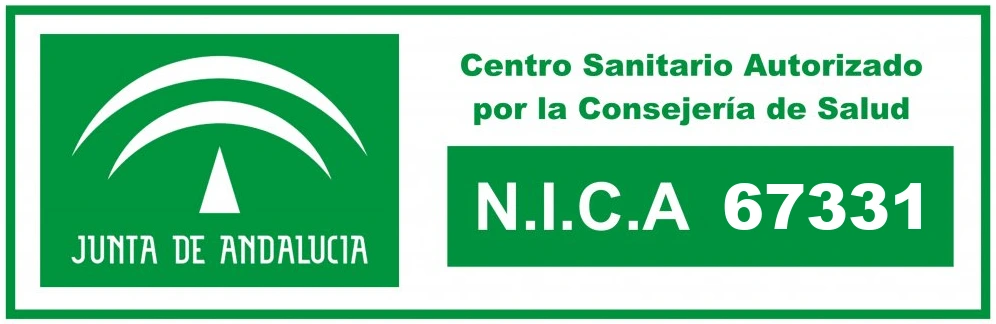
Registered health centre. Authorised by the Junta de Andalucía, N.I.C.A. 67331.