
Home / About the centre / Outcomes & quality
Honesty about results
Outcomes and quality: why we do not publish a success rate
Almost every rehab website quotes a headline success figure. We do not, and this page explains why that number is usually meaningless, and how you can actually judge the quality of a programme instead.
We would rather show you how the programme is built, how it is regulated, and what we actually record, so you can judge the quality for yourself rather than take a number on trust.
Why we do not publish a success rate
There is no agreed definition of success in addiction treatment, and no independent body that audits and publishes outcome figures for private residential centres. That is the honest state of the field, and it is the reason a percentage on a rehab website cannot be compared with a percentage on any other rehab website.
Ask three questions of any figure you are shown. Success measured how? Complete abstinence, reduced use, staying in treatment and feeling better at discharge are entirely different outcomes. Measured when? A result taken on the last day says little about six months later at home, which is where the real test happens. Measured by whom? Almost all published figures are self-reported.
There is also something specific to addiction. Recovery is rarely a straight line. People move forward, have a setback, and move forward again. A statistic that counts one lapse as a failed outcome misdescribes how change actually works, and one that excludes everyone who left early is measuring only the people it managed to keep.
So we publish the things that can be checked instead: the licence, the programme, the price and the team.
What we measure instead
Quality in a residential programme is not one number, it is a set of things you can check are actually in place. These are what we hold ourselves to, and what we would encourage you to look for anywhere you consider.
- A structured, published programme. Our stay follows a defined clinical curriculum of seventeen modules, from skills-based psychoeducation and the ABC cognitive model through boundaries, communication, trauma and relapse prevention. You can read the full programme before you commit, rather than take "bespoke therapy" on trust.
- A coherent clinical model. Everything is built on the Regulation Model and the PROMIS clinical approach, which has treated addiction since 1986. A programme grounded in one consistent method is easier to deliver well than a loose menu of therapies.
- Genuine regulation. Sierra is a registered health centre with the Junta de Andalucía, NICA 67331. You can verify our licence yourself, which is the single most useful quality check any prospective patient can make.
- A qualified, accountable team. The programme is directed by a General Health Psychologist, with qualified nurses part of the team throughout your stay. You can see who is responsible for your care on the clinical team page.
- Support that continues after discharge. The strongest signal of a serious programme is what happens when the residential stay ends. Our aftercare and discharge planning begins during treatment, because the months at home are where recovery is tested.
What we do know, and record
Declining to publish a percentage is not the same as not knowing how people are doing. These are the things we record for every person who comes through the programme. None of them is a success rate, and we are not going to turn them into one, but they are concrete and they are what we review.
| What we record | Why it is worth knowing |
|---|---|
| Whether someone completes the 28 days | Leaving early is the clearest early signal that something is not working, whether that is the fit of the programme, an untreated mental health condition, or something happening at home. We look at every early discharge rather than counting it out of the figures. |
| Attendance at the structured sessions | The programme is three group sessions a day plus individual therapy three times a week. Who is turning up, and who has quietly stopped, is visible immediately in a house this small, and it is acted on the same week. |
| The daily check-in and the closing commitment | Every session opens with a structured check-in on how someone has arrived and closes with a commitment they set themselves. That is a continuous record of how a person is actually doing, reviewed with them rather than about them. |
| Whether an aftercare plan was agreed before discharge | What happens after the residential stay is the strongest predictor of what happens next, so a plan agreed and written down before someone leaves is a real quality measure. It is either done or it is not. |
| Whether a written handover went to the GP | With the person’s consent, so that prescribing and follow-up at home are managed rather than reconstructed from scratch. |
| Continued contact after discharge | Attendance at the weekly aftercare group, and whether we are still in contact at three and six months. This is the measure that matters most and the one hardest to collect honestly, because the people who disengage are the people you most want to hear from. |
| What people say about the programme | Direct feedback on the work itself, gathered during the stay and used to change how modules are delivered. |
We are deliberately not converting any of this into a headline figure. A number built from our own records, by us, and checked by nobody, would have exactly the problem described above.
Questions worth asking any centre
If you are comparing options, the most reliable quality checks are not the ones a brochure volunteers. Ask any centre to show you its licence and the exact body it is registered with, and verify it independently. Ask how "success" is defined if a figure is quoted, and who checked it. Ask what the aftercare actually consists of, and for how long. Ask who will be clinically responsible for you, and what their qualification is. Ask whether the programme is written down. A centre confident in its quality will answer all of these plainly.
We would rather earn your trust with what we can show you than with a number we cannot verify. The programme, the licence and the price are all published in full, so you can weigh them before you decide. When you are ready, see exactly what is included and what it costs on our pricing page, or talk it through with us through admissions.
Questions people actually ask
What is Sierra Recovery's success rate?
We do not publish a single success rate, because there is no agreed definition of success in addiction treatment and no independent body that audits outcome figures for private residential centres. Published figures are almost always self-reported, which is why they cannot be compared with each other. Instead we publish the full programme, our licence and our team, so you can judge quality on things you can actually verify.
Why do other rehabs quote a success rate and you do not?
Because a headline percentage rarely survives three simple questions: success measured how, measured when, and checked by whom. Most figures count only the people who completed treatment, are taken on the last day rather than months later at home, and are never independently audited. We would rather not market a number we cannot stand behind.
How can I judge the quality of a rehab if there is no success rate?
Look for things you can check are in place: a written, published programme, a coherent clinical model, genuine regulation you can verify with the regulator, a named and qualified clinical team, and real aftercare that begins before discharge. These predict a good experience far better than a percentage on a brochure.
Does a relapse mean treatment failed?
No. Recovery is rarely a straight line, and many people move forward, have a setback and move forward again. Our relapse prevention work treats setbacks as something to prepare for and learn from, not as proof of failure. A statistic that counts a single lapse as a failed outcome misrepresents how change actually happens.
Do you measure anything at all during the programme?
Yes. Every therapeutic session opens with a structured check-in and closes with a personal commitment, we ask for direct feedback on the work, and we review each person's plan with them. We simply use that information to shape care while someone is with us, rather than converting it into a marketing statistic.
 +
+
Talk to a clinician today
You will speak to our admissions team, English-speaking clinicians who know the programme and the people in it. Callback within 24 hours.
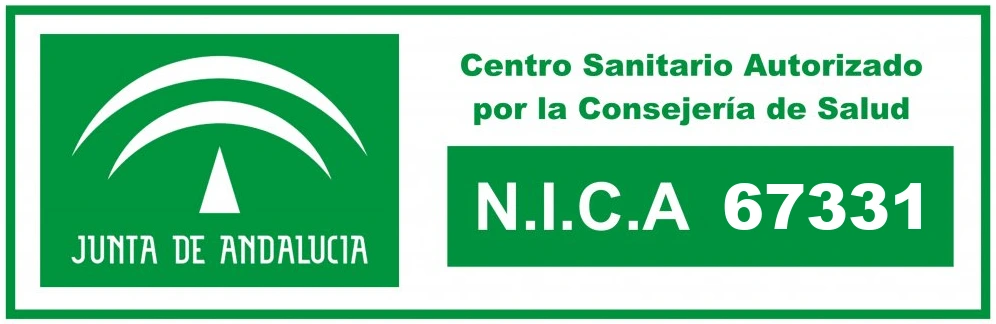
Registered health centre. Authorised by the Junta de Andalucía, N.I.C.A. 67331.