
Home/Admissions/Rehab in the UK vs Spain
An honest comparison
Rehab in the UK vs Spain: an honest, side by side comparison
A straight look at cost, distance, climate and clinical care, written to help you choose well, including the times a UK service is the better answer for you.
The choice between private residential rehab in Britain and travelling to Spain turns on six things: cost, how long you wait to start, how the centre is regulated, whether medically supervised detox is needed and where it happens, what continues after discharge, and how far you are from home. Spain wins on some and loses on others. This page sets both routes out side by side, with the source under every figure, and says plainly where a UK route is the better answer. Those six questions are the same whether you are weighing drug and alcohol rehab at home against rehab in Spain, and whether the problem is alcoholism, another drug addiction, or a mental health condition alongside it.
Know our interest before you read on. Sierra Recovery is a licensed rehab centre in Spain, in Humilladero, inland Malaga province, so we benefit if you choose the Spanish route. That is why this page says where staying in Britain is the better choice, and why two comparison cells carry no number rather than one nobody publishes.
A safety note before anything else. If you are physically dependent on alcohol or benzodiazepines, do not stop suddenly, because sudden withdrawal from either can be dangerous. In a life-threatening emergency call 999 or 112. For urgent non-emergency advice, call NHS 111 or speak to your GP. Any medically supervised withdrawal should be completed in an appropriate medical setting before a residential programme begins, wherever that programme is.
On cost: Sierra publishes GBP 9,900 for 28 days with a private room, hospital detox arranged and billed separately, against published UK market pricing of roughly GBP 2,000 to GBP 5,000 a week. Both figures, and their limits, are below.
At a glance: UK private rehab and Spanish private rehab side by side
Each row is expanded, with its source, in the section that follows. Two cells read "No published figure" because no regulator publishes one, in either country. Where a figure is industry practice rather than a measured statistic, the table says so. These rows also read the same way whether the substance use involved is alcohol or drug related: cost, waiting times and regulation do not change because the problem is alcohol addiction rather than another drug.
| Factor | UK private residential | Spain private residential (Sierra as the worked example) |
|---|---|---|
| Cost | GBP 8,000 to 16,000 for 28 days, premium higher | GBP 9,900 for 28 days, private room, detox separate |
| Time to start | Commonly 24 to 48 hours (industry practice, not a statistic) | No published figure |
| Regulator | Care Quality Commission in England | Regional authorisation, Real Decreto 1277/2003, care unit U.71 |
| How you verify it | Search cqc.org.uk, read rating and report | Search SICESS or REGCESS for the centre's NICA number |
| Medically supervised detox | Hospital admission where risk is high (NICE CG100) | Separately authorised category; U.71 does not cover it |
| Distance and family | Domestic travel, no time difference | 2h35 to 2h55 direct from London, Manchester, Birmingham |
| Aftercare | Shared-care handover to your GP | No published guidance on continuity from abroad |
Sources: NICE CG100, Real Decreto 1277/2003, Orden de 29 de mayo de 2023, Care Quality Commission, and Sierra's own published fee. UK cost figures are provider-published market pricing, not a government price list.
What you actually pay, and what the price includes
Cost is the first real difference most people notice, and it is the figure quoted most loosely in this sector. So every number below carries the basis it rests on.
| What you are buying | Published cost | Typically included | Charged separately | Basis of the figure |
|---|---|---|---|---|
| UK private residential, per week | GBP 2,000 to 5,000, national average about GBP 3,500 | Accommodation, meals, individual and group therapy, medical monitoring, relapse-prevention work, some aftercare | Flights and transport, specialist psychiatric input, one-to-one trauma therapy beyond the core programme, extended stays, private nursing, companion accommodation | Provider-published market pricing, not a regulator figure |
| UK private residential, 28 days | GBP 8,000 to 16,000; up to GBP 40,000 cited by some providers for premium and luxury programmes | As above | As above | Provider-published market pricing, not a regulator figure |
| Sierra Recovery, 28 days, private room | GBP 9,900 | Set out in full on our pricing page | Hospital detox where clinically needed, flights | Sierra's own published fee |
| Spain, wider private market | No published figure | Not applicable | Not applicable | No regulator publishes a Spanish market price list; ranges circulated online are provider marketing |
Sources: PROMIS market pricing round-up for the weekly range; the 28-day range is synthesised across several UK provider pricing pages, which we attribute rather than link because they are competing treatment providers; and Sierra's pricing page for the GBP 9,900 figure. The inclusion and exclusion columns describe a general market pattern across published provider pricing, not Sierra's own inclusions, which are on the pricing page.
Why the Spanish figure is lower
Cheaper can sound like lesser, and that is not what is happening. Four things drive the difference. The Spanish cost of living sits well below the UK. The house is a rustic farmhouse in inland countryside, not a townhouse in central London. There is no luxury mark-up. And we pay no referral fees.
That last point is rarely said out loud. Brokers and some so-called impartial helplines are paid a commission to steer enquiries. Sierra takes direct admissions only, so every pound goes to treatment rather than to whoever passed your details along. It is a fair question to ask of any centre, in either country.
One honest caveat: with a Spanish programme you also budget for flights, and if a medically supervised detox is needed first, that is arranged and billed separately at assessment rather than folded into a headline price. For the UK side in detail, including the free routes worth trying first, see how much rehab costs in the UK.
What no one publishes, and why that matters
Neither the UK nor Spain has an official price list for private addiction treatment. Every range on this page, ours excepted, comes from providers publishing their own pricing, and that is as true of quoted prices for rehab in Spain as it is of the UK figures above. Price alone therefore tells you almost nothing about quality. The inclusions list and the licence do.
How long you wait: the NHS route, UK private and Spain
Few comparisons answer this, and it is often the question that decides matters. It also contains a trap: there are two very different NHS waits, and they get conflated constantly.
| Route | Typical time to start | What has to happen first | Basis of the figure |
|---|---|---|---|
| NHS community treatment, first intervention | 98 to 99 per cent seen within three weeks; average about 1.3 days | Self-refer or GP-refer to the local drug and alcohol service | OHID national statistics, 2024/25 |
| NHS or local-authority funded residential placement | Weeks to months, varies widely by area | Assessment, engagement with community treatment, then a local authority funding panel decision | Documented funding pathway; no national waiting-time statistic is published |
| UK private residential admission | Commonly 24 to 48 hours, sometimes same day | Bed availability and payment or insurance confirmation | Industry practice, no regulator statistic |
| Spain private residential admission | No authoritative figure is published | Assessment, payment confirmation, travel arranged | Evidence gap; we will not quote a number we cannot source |
Sources: OHID, substance misuse treatment for adults, 2024/25 and Dame Carol Black's Independent Review of Drugs, Phase Two. The private admission timescales are industry admissions guidance from sector sources, attributed rather than linked.
The two NHS waits people confuse
The fast figure is real. In 2024/25, 98 to 99 per cent of adults waited three weeks or less for their first intervention, average about 1.3 days. That measures time to a first community contact or assessment, not time to a funded residential placement.
The residential pathway is different. You self-refer or are referred by a GP to the local drug and alcohol service, a keyworker assesses you, and you engage with community treatment first. Only then does the keyworker submit an application for residential funding to a local authority panel, which decides whether to fund a placement and where. It is means-tested, needs-led and commissioned by councils rather than paid from a single central NHS budget, which is why waits vary so much from one area to the next.
Dame Carol Black's review found that residential rehabilitation and inpatient detoxification had been significantly cut back and had become hard to access, with some areas requiring extended engagement, in one example attending groups twice weekly for two months, before a person could even be considered eligible.
Why nobody publishes a private admission time
No regulator in either country publishes an admission-time statistic for private alcohol rehab or drug rehab: it is operational practice, not a legal standard. The 24 to 48 hour UK figure is what the sector reports of itself. For Spain we found nothing, and pages asserting rapid turnaround are publishing marketing copy. Search for private rehab Spain and you will find admission promises quoted as though they were measured figures. The same caution applies to alcohol rehab treatment advertised as available within hours, in Britain as much as here.
Who pays: NHS funding, private medical insurance and the GHIC
Three separate funding questions get muddled together here, and only one of them has a clear published answer.
The NHS does not run its own residential rehabilitation clinics. It commissions treatment through local authorities, who fund community services directly and can fund or contribute to a residential placement through the panel process described above. It is not an automatic entitlement.
What the GHIC does and does not cover
This one is unambiguous. The UK Global Health Insurance Card, successor to the EHIC, covers state-provided medically necessary healthcare in Spain, including emergency care, that cannot reasonably wait until you come back to the UK. NHS guidance is explicit that it does not cover treatment at a private medical facility, and does not cover being flown back to the UK. See the NHS guidance on the GHIC.
So the card gives you no cover at all for a private residential stay, in Spain or anywhere else in the EEA. Check travel and health insurance against it before you travel for private treatment. The card still matters for the emergency scenario, covered below.
Asking your insurer the right question
UK private medical insurance is the murkiest part of this. Addiction treatment is frequently excluded outright from standard policies, and where cover exists it is often capped. Cover for treatment obtained outside the UK generally depends on holding an international or worldwide plan rather than a UK-only one.
We are deliberately not putting a number on that. The available sources are industry summaries rather than insurers' own policy documents, so no general rule can be stated as fact. The only reliable answer comes in writing from your own insurer. Ask two things: is addiction treatment covered under this policy at all, and is treatment obtained outside the United Kingdom covered. If it helps to talk it through, get in touch.
Regulation: CQC in the UK, regional health registers in Spain, and how to check either yourself
Most pages say a Spanish centre is "regulated by the Spanish government" and stop there, naming no register, no code and no way to check. The code that matters for addiction treatment in Spain is atencion sanitaria a drogodependientes (healthcare for drug dependency, authorised care unit U.71). British providers advertise alcohol and drug treatment under a single CQC registration, whereas clinics in Spain are authorised unit by unit, so an authorisation that covers rehab treatment for a drug or alcohol addiction can still exclude services a British reader would assume are included. Here is the detail for both countries.
| Where the centre is | Regulator and legal basis | What the authorisation covers | How you check it yourself |
|---|---|---|---|
| England | Care Quality Commission | Regulated activities including treatment of disease, disorder or injury and personal care in residential settings | Search by name or location on cqc.org.uk, read the current rating and the full inspection report |
| Scotland | Care Inspectorate, under the Public Services Reform (Scotland) Act 2010 | Registered care services | Search the Care Inspectorate register |
| Wales | Care Inspectorate Wales | Registered social care and childcare services | Search the Care Inspectorate Wales register |
| Northern Ireland | Regulation and Quality Improvement Authority | Registered health and social care services | Search the RQIA register |
| Spain, Andalucia | Junta de Andalucia, under Real Decreto 1277/2003, with Andalucian protocols in the Orden de 29 de mayo de 2023 | Named care units, including U.71 for addiction care | Search SICESS regionally or REGCESS nationally for the centre's NICA number |
Sources: Real Decreto 1277/2003, Orden de 29 de mayo de 2023, BOJA 104, the Junta de Andalucia register of healthcare centres and the Ministerio de Sanidad national register. The four UK regulators work under a four-nations memorandum of understanding.
What a CQC rating actually tells you
In England, a provider must be registered with CQC before it may lawfully deliver regulated activities. CQC then inspects, rates and can take enforcement action.
The four ratings are not interchangeable. Outstanding is reserved for services using creativity and innovation to sustain exceptional quality. Good means meeting regulatory expectations, with none of the five key questions rated inadequate and no more than one requiring improvement. Requires improvement means a further inspection is due within 12 months. Inadequate means performing badly, and triggers regulatory action.
One point a reader in Glasgow or Belfast needs first: CQC covers England only. The wrong register tells you nothing.
How to find a Spanish centre on SICESS or REGCESS
Spain devolves healthcare authorisation to its 17 autonomous regions. Real Decreto 1277/2003 sets the classification framework every region must apply, but authorisation of an individual centre is regional. In Andalucia the Junta de Andalucia enters the centre on SICESS, the regional register, and issues a NICA, a Numero de Identificacion de Centro Autorizado (authorised centre identification number). REGCESS, run by the Ministerio de Sanidad (Ministry of Health), aggregates the regional registers. Both are public and free.
Andalucia layered its own rules on top. The Orden de 29 de mayo de 2023 (Order of 29 May 2023) approved operating protocols for addiction healthcare centres, classifying them explicitly as healthcare centres and setting minimum requirements across six facility types.
Sierra's own entry is the worked example: NICA 67331, care unit U.71. The search takes a couple of minutes, but only if you use the centre's exact registered company name, which is frequently not its trading name.
What unit code U.71 does not cover
Real Decreto 1277/2003 defines U.71 as a multidisciplinary care unit in which, under the supervision of a healthcare professional, prevention, care and rehabilitation services are provided to drug-dependent people through therapeutic techniques.
Read that carefully. It is a care and rehabilitation unit, not a hospital inpatient authorisation. U.71 is not a hospital licence and it does not authorise medically supervised detoxification. That is true of Sierra and of every other centre holding the same code. Any centre that holds U.71 and implies it can run a medical detox is claiming something its licence does not support.
Detox: who may legally provide medically supervised withdrawal, and where it happens
This section exists to protect you, not to sell Spain. A residential licence in either country is not a detox licence, and the questions below apply equally to a provider in Surrey and one in Andalucia.
To repeat the note at the top of this page: if you are physically dependent on alcohol or benzodiazepines, do not stop suddenly. In a life-threatening emergency call 999 or 112. For urgent non-emergency advice, call NHS 111 or speak to your GP.
| UK | Spain (Andalucia) | |
|---|---|---|
| Governing framework | NICE CG100 and the Orange Book, UK clinical guidelines, 4th edition 2017 | Orden de 29 de mayo de 2023, within the Real Decreto 1277/2003 framework |
| Who may provide medically supervised withdrawal | Clinical teams under the Orange Book: psychiatrists and other doctors, nurses, psychologists, pharmacists and keyworkers | Only a centre authorised in the residential detoxification category; a U.71 authorisation does not cover it |
| Where it happens for high-risk withdrawal | Hospital admission, recommended by NICE where there is high risk of withdrawal seizures or delirium tremens | The same clinical answer: an appropriate medical setting, before the residential programme begins |
| What is explicitly prohibited | Ultra-rapid detoxification under general anaesthesia or heavy sedation must not be offered | Apply the same red flag to any provider in any country that markets rapid detox |
| What this means at Sierra | Not applicable | NICA 67331, care unit U.71: not a hospital, not a detox unit, hospital detox arranged and billed separately |
Sources: NICE Clinical Guideline CG100, the Orange Book, Drug misuse and dependence: UK guidelines on clinical management, and the Orden de 29 de mayo de 2023.
Why unsupervised withdrawal from alcohol or benzodiazepines is dangerous
NICE CG100 recommends that people in acute alcohol withdrawal who are at high risk of developing withdrawal seizures or delirium tremens should be offered admission to hospital for medically assisted alcohol withdrawal. That is a specific instruction about a specific level of risk, and it is the clearest single reason a UK route can be the safer one.
NICE also frames these as preventable complications: if withdrawal is managed well, delirium tremens and seizures should not occur outside a presentation to acute hospital care, and where they do it is generally because dependence went unrecognised or withdrawal was managed sub-optimally. The physical withdrawal symptoms involved are not merely unpleasant. Untreated withdrawal can progress to generalised tonic-clonic seizures, delirium tremens and death, with benzodiazepines the first-line therapy for moderate to severe cases.
The difference between the two stages is set out on detox versus rehab and in clinical detail on alcohol detox.
The rapid-detox red flag
The Orange Book, the UK clinical guidance issued on behalf of the four UK health departments, states explicitly that ultra-rapid detoxification under general anaesthesia or heavy sedation must not be offered, because of the risk of serious adverse events including death.
If a provider anywhere, in Britain, Spain or further afield, markets a rapid or accelerated detox under sedation, you have a UK clinical guideline saying it must not be offered. That is a reason to walk away, not to negotiate.
What Sierra's licence does not cover
In Andalucia, residential detoxification is a distinct facility category. The Orden de 29 de mayo de 2023 lists Centros de Deshabituacion Residencial (residential detoxification centres) as one of six separately authorised addiction-service categories, with its own minimum staffing and safety requirements, separate from outpatient-style units such as U.71. Authorisation is devolved, so other Spanish regions run their own regimes.
We are a registered health centre, NICA 67331, holding care unit U.71. We are not a hospital and not a detox unit. Where a medically supervised withdrawal is needed it is completed in an appropriate medical setting first, arranged and billed separately, and qualified nurses are part of the team during the stay.
Aftercare: what continues once you are home
This is the question families really ask about treatment abroad: what happens when the 28 days end and we are back in Britain.
| After discharge | What the evidence says | Treated in the UK | Treated in Spain |
|---|---|---|---|
| Relapse risk window | Highest immediately post-discharge; continuing care of 12 months or more outperforms shorter programmes in controlled trials | Same | Same |
| How relapse should be read clinically | NIDA: 40 to 60 per cent, comparable to recurrence in hypertension and asthma | Same | Same |
| Handover to the GP | Shared care agreement, two-way communication, transfer-of-care arrangements before discharge, built on NICE CG115 | Documented NHS pathway | No published guidance |
| Continuity when treatment was abroad | No UK guidance addresses this directly; the same handover logic applies by inference | Not applicable | Inference, not a sourced rule |
| Continued medication where clinically indicated | Naltrexone, acamprosate, buprenorphine, general clinical background only | Prescribed by the GP or specialist service | Prescribed by the GP or specialist service on return |
Sources: Recovery Research Institute, NIDA, and NHS pathway guidance on referring patients to specialist alcohol treatment. The medication row is general clinical background and is not a description of Sierra's own aftercare.
The handover document to ask for
In the UK, continuity between a specialist addiction service and a patient's GP rests on a formal shared care agreement: clinical responsibility transfers to general practice, GP prescribing is supported by that agreement, and transfer-of-care arrangements are in place before discharge, following guidance built on NICE CG115.
The post-discharge period is one of the highest-risk windows for relapse, and the duration of continuing care is one of the strongest predictors of sustained abstinence. NIDA frames relapse rates of 40 to 60 per cent as comparable to recurrence in other chronic conditions such as hypertension and asthma: a relapse means the plan needs review and continuation, not that treatment failed.
Where the evidence runs out
No NHS or regulator guidance we could find addresses continuity of care when the residential treatment took place overseas. What follows is the logical extension of the shared-care model, not a published rule: a UK patient returning from a Spanish residential programme needs the same formal handover to their GP and, where relevant, to the local community drug and alcohol service.
That gives you a question to put to any centre, in either country: exactly what handover document does it produce, who does it go to, and what contact continues after discharge. A centre that cannot answer clearly is telling you something. How we approach the returning-home phase is on relapse prevention.
Travel, distance and keeping the family involved
The instinct is that treatment close to home is easier. Sometimes it is. But a residential stay means leaving home anyway, and for many people distance from the streets, contacts and routines tied to their using is part of what makes early recovery possible rather than a drawback. A short flight to Malaga puts real space between someone and the environment where the habit was learned.
Distance cuts the other way too, and we say so below.
What the evidence says about family involvement
The research here does not point neatly in Spain's favour, and it would be dishonest to present it as if it did. A 2014 meta-analysis of 39 controlled studies, covering more than 3,500 participants, found that family-involved treatment produced statistically significant improvements in both treatment retention and long-term abstinence compared with individual treatment alone, across substance types and settings. That is a real argument for staying closer to home if in-person family involvement is what your situation needs.
Family involvement has to be designed rather than assumed, whichever country you choose. If you are the family member reading this, Adfam is the principal UK charity supporting families and friends affected by someone else's drug or alcohol use, and its guidance is worth reading independently of any centre. We cover the family side on how addiction affects families.
Getting here
| From | Direct flight time to Malaga | Basis |
|---|---|---|
| London (Gatwick, Heathrow, Stansted) | Approximately 2h35 to 2h45 | Published direct-service schedule times |
| Manchester | Approximately 2h45 to 2h55 | Published direct-service schedule times |
| Birmingham | Approximately 2h40, direct services operated by Jet2, Ryanair and TUI | Published direct-service schedule times |
| Time difference | Spain is one hour ahead of the UK year round, CET or CEST against GMT or BST | General timezone knowledge; clocks change on aligned dates |
Flight times come from published airline schedules rather than an official statistical source, so treat them as approximate. The hour's difference means a family call set for 7pm UK time falls at 8pm here, easy to plan around for weekly video sessions. Malaga airport to the centre is a road transfer inland, and we arrange it.
The clinical model, and why the postcode is not the deciding factor
The thing that should decide the choice is the quality of the clinical work, not the postcode. A beautiful setting is not the same as psychiatric cover, detox monitoring or qualified therapists, and that is as true of a Georgian house in the Home Counties as it is of a villa on the Costa del Sol. Both markets also advertise work on co-occurring mental health issues alongside substance use disorders, and no licence in either country tells you how much psychiatric input sits behind that offer. Effective addiction treatment is defined by that clinical work rather than by the length of the therapy list.
Most of the treatment programmes UK rehabs and rehab centres in Spain offer are built from the same components: individual and group therapy sessions, cognitive behavioural therapy and other behavioural therapy work, psychoeducation, family work and relapse prevention. Some centres add holistic therapies such as yoga, massage or equine therapy. Those additions are not regulated and are not evidence of clinical quality, and no licence in either country covers them. What matters is who assesses you, who supervises the treatment plan, and what the team is authorised to do if your condition changes.
Sierra's programme adapts the PROMIS Clinics model to this centre, and Sierra is clinically backed by PROMIS. PROMIS was founded in the mid-1980s by Dr Robert Lefever, as set out in its own history. Robin Lefever founded Sierra Recovery and is Managing Director of PROMIS. The two are separate companies.
The model treats addiction as a learned way of regulating an unbearable internal state, not a moral failure or a lack of willpower. That changes the tone of the work: skills-based and non-shaming rather than confrontational. Clinical work is directed by Nerea Encinas Sanchez, the director of the centre and the director named on the NICA 67331 licence, and delivered by an English-speaking team. The full shape of the 28 days is on our programme page.
When a UK option is the better choice
Spain is not the right answer for everyone, and choosing it when a UK route fits you better helps no one. A UK service is likely the better call when:
You need medically complex inpatient detox with a hospital on the same site, rather than detox completed before a residential programme. NICE recommends hospital admission for medically assisted withdrawal where there is a high risk of withdrawal seizures or delirium tremens, and that is hospital-level monitoring, not something a stand-alone residential setting provides.
Court or probation licence conditions restrict travel. People on probation licence may need permission to travel abroad, and probation officers assess whether travel would interfere with a sentence plan, reporting requirements or attendance at offending-behaviour programmes, which can include treatment requirements. The guidance from Unlock sets out the position, including that appeal routes against a refusal are limited.
Your first and free step has not been tried yet. NHS and local-authority community services, and groups like AA and NA, cost nothing and are the right starting point for many people. You do not have to pay to seek help. See how much rehab costs in the UK for that route in full.
Being physically near children, a carer role or work commitments matters more to you than distance from your triggers. We cannot point you to a study for this one; it is plain common sense, and in our experience it is decisive more often than any clinical factor.
You want family involved in person throughout.
Flying is not realistic for health or practical reasons.
Where those do not apply, the case for Spain is straightforward: a licensed centre with a verifiable authorisation, an English-speaking clinical team, a published fee, and real distance from the environment tied to the habit, with aftercare continuing once you are home. Weigh the two treatment options on those points rather than on the brochure, because what decides addiction recovery is the clinical work, not the country your recovery journey starts in.
Talk to a clinician, not a call centre
You will speak to Nerea, our director and a registered psychologist, not a call centre. Callback within 24 hours.
The enquiry form takes three steps and about thirty seconds. It is confidential, and there is no obligation. If you would rather talk now, call +44 20 3948 8938.
We take direct admissions only and pay no referral fees, so nobody is paid a commission to send you here. And if we think a UK route would serve you better, we will tell you.
Questions people actually ask
Is rehab in Spain actually cheaper than the UK, or does the lower price mean lower quality?
Cheaper on published figures, yes. UK private residential commonly runs GBP 2,000 to 5,000 a week, roughly GBP 8,000 to 16,000 for 28 days, premium programmes higher. Sierra publishes GBP 9,900 for 28 days with a private room, hospital detox billed separately. Those UK ranges are provider-published market pricing, not regulator figures. Price alone says nothing about quality: check the inclusions and verify the licence.
Can I get rehab funded by the NHS, and how long does it take?
The NHS does not run its own residential rehab clinics. Funding goes through your local authority drug and alcohol service, usually after you have engaged with community treatment, then a panel decides. That commonly takes weeks to months and varies widely by area. First contact is far faster: 98 to 99 per cent of adults were seen within three weeks in 2024/25, average about 1.3 days. The two are not the same figure.
How do I check that a Spanish rehab centre is actually licensed?
Every authorised healthcare centre is on its region's public register. In Andalucia that is SICESS, via the Junta de Andalucia health portal, and each centre carries a NICA (Numero de Identificacion de Centro Autorizado, authorised centre identification number). REGCESS, run by the Ministerio de Sanidad, aggregates the regional registers. Both are free. Sierra's entry is NICA 67331. Search the exact registered company name, not the trading name.
What does a UK CQC rating actually tell me?
CQC rates registered providers in England on four levels: Outstanding, Good, Requires improvement and Inadequate, assessed against five key questions. Requires improvement or Inadequate means CQC has found problems and will re-inspect, typically within 12 months. Any English provider's rating and full report is searchable on cqc.org.uk. Scotland, Wales and Northern Ireland use different regulators.
Can Sierra provide medical detox on site?
No. Sierra is a registered health centre holding the care unit atencion sanitaria a drogodependientes (healthcare for drug dependency, authorised care unit U.71) under NICA 67331. That is not a hospital licence and does not cover medically supervised detoxification. Where withdrawal needs medical supervision it is completed in an appropriate medical setting first, billed separately, with qualified nurses part of the team during the stay. In an emergency call 999 or 112, or NHS 111.
What happens if there is a medical emergency while I am in treatment in Spain?
Spanish emergency services are reached on 112. The GHIC, successor to the EHIC, covers medically necessary treatment at Spanish state healthcare providers, including emergency care. It explicitly does not cover treatment at a private medical facility, and does not cover medical repatriation to the UK. That is a genuine gap: check your travel and health insurance against it before travelling for private treatment.
Will my UK private medical insurance pay for treatment in Spain?
Not automatically. Addiction treatment is frequently excluded or capped under standard UK private medical insurance, and cover for treatment obtained outside the UK generally depends on holding an international or worldwide plan. The available sources here are industry summaries rather than insurers' own policy documents, so no general rule can be stated as fact. Confirm directly with your insurer, in writing, and ask specifically about treatment obtained outside the United Kingdom.
Will I be treated in English?
Yes. The clinical team is English-speaking, and the programme uses the PROMIS Clinics model adapted to Sierra, with Sierra clinically backed by PROMIS. Therapy, psychoeducation and day-to-day support are delivered in English, not translated second-hand. Clinical work is directed by Nerea Encinas Sanchez, the director of the centre and the director named on the NICA 67331 licence.
When is staying in the UK clearly the better choice?
When medically complex inpatient detox with a hospital on site is needed, since NICE recommends hospital admission for anyone at high risk of withdrawal seizures or delirium tremens. When probation or court conditions restrict travel abroad. When the free NHS, local-authority or mutual-aid routes have not been tried. When caring responsibilities or work mean proximity matters more. Or when flying is not realistic. We will say so at enquiry.
 +
Talk to a clinician today
You will speak to our admissions team, English-speaking clinicians who know the programme and the people in it. Callback within 24 hours.
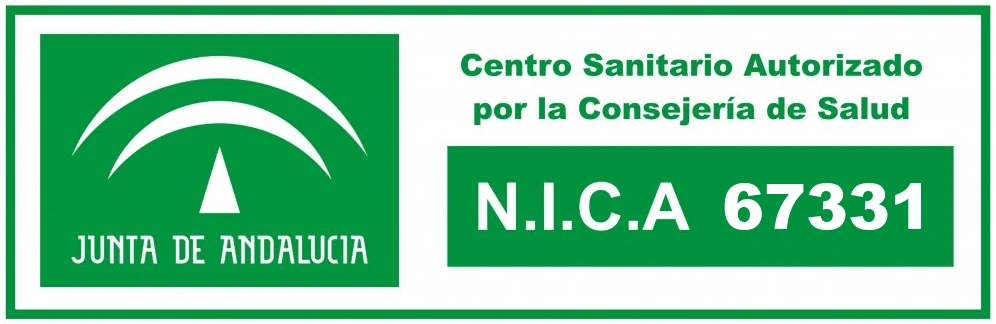
Registered health centre. Authorised by the Junta de Andalucía, N.I.C.A. 67331.