Home / Guides / Private rehab in Spain
Choosing a centre
Private rehab in Spain
Anyone can put up a website with a pool, a mountain view and the word clinic on it. Spain has a public register that tells you whether a centre is authorised to treat you, it is free to search, and almost nobody tells you it exists. This page shows you how to use it.
Registered on the Andalusian health register as N.I.C.A. 67331. You can look that up without asking us.
Private rehab in Spain means privately funded residential addiction treatment, paid for by the person or the family rather than by a state health service. Every centre lawfully providing it holds a health authorisation from the autonomous community it sits in, and those authorisations are collected in a free national register, REGCESS, published by the Ministerio de Sanidad. Before you pay anyone, ask for the registration number and the exact registered name, then read what the entry actually authorises.
That last step is the one almost everybody skips. It is also the reason we publish our registration and what it authorises in full, including the parts that are not flattering. Everything below is written so that it works whether or not you ever speak to us.
What does "private" actually mean in Spain?
Two people can use the word private in the same phone call and mean entirely different things.
Privately funded, as opposed to the NHS. In practice, residential treatment in Spain is self funded or family funded, and the next section sets out why every other route is closed. The consequence people miss is not the bill. Nobody is vetting the centre on your behalf.
A residential rehab in England is registered with, and inspected by, the Care Quality Commission whether you pay for the bed or a local authority does. Cross a border and that layer of protection does not travel with you. When you are the payer, you are also the regulator's substitute, and the vetting becomes yours to do. That is what most of this page is about.
Private in the sense of discreet. Paying privately abroad genuinely does buy distance from your own social circle, your workplace and anyone who might recognise you in a waiting room. That is a real benefit and one of the honest reasons people fund treatment in Spain themselves. It is also the part of the offer easiest to charge for, because privacy has no unit of measurement, so be clear how much of your fee is buying discretion and how much is buying clinical contact hours. The premium end of the Spanish market is a separate question and has its own page.
There is a third meaning of the word, and it is the one nobody explains. In Spain, private does not mean unregulated. A privately funded centre sits inside the same authorisation system as a public hospital, set out nationally in Real Decreto 1277/2003, the royal decree that establishes the general bases for authorising health centres, services and establishments. Addiction treatment centres are health centres in Spanish law, not a category of their own. Private funding changes who pays. It does not change what a centre is permitted to do.
Who pays for private treatment in Spain, and who does not
Most people researching this are quietly hoping some part of it is covered. Deal with that first, because the answer changes the whole calculation.
The NHS S2 route. S2 funds planned treatment abroad only where the provider is a public one and the treatment would be available to you under the receiving country's state scheme. It does not cover private treatment, and approval has to be granted before you travel, not claimed afterwards. The NHS guidance on the planned treatment S2 funding route sets out both conditions.
GHIC and EHIC. These cover state provided healthcare that is medically necessary while you are temporarily abroad, meaning care that cannot reasonably wait until you get home. NHS guidance states plainly that the card does not cover treatment in a private medical facility. A booked residential admission is the opposite of the situation the card was designed for.
UK private medical insurance. Two separate obstacles sit in the way. Addiction treatment is commonly excluded outright or heavily capped, and treatment outside the UK is commonly excluded again under a different clause. MoneyHelper's guidance that private policies normally exclude pre-existing conditions bites hard here, because an addiction or mental health diagnosis in recent years is routinely underwritten as pre-existing. Read your own policy wording rather than anyone's summary of it, including ours.
Which leaves self funded or family funded, which is what nearly every UK client at a Spanish centre turns out to be. Budget for the whole course rather than the headline figure, because the costs carry on after you fly home.
How do you check a Spanish centre is licensed?
This takes about ten minutes and costs nothing. It is the single piece of work that private payment makes your job rather than a regulator's.
How the system is built. Real Decreto 1277/2003 sets the national bases for authorising health centres, services and establishments, using one classification that applies across the whole country. Authorisation itself is devolved. Each of the seventeen autonomous communities, plus Ceuta and Melilla, issues its own authorisations and keeps its own register, and those registers feed the national one. REGCESS, held by the Ministerio de Sanidad, is public and free to search by law under article 5 of that decree.
For the fuller record, go to the region. Andalusia, the Comunitat Valenciana, Madrid, Catalonia and the Balearic Islands all publish their own. The Balearics run a separate regime, which is why an Andalusian number means nothing on the islands, and the Balearic regime is set out on its own page. The national framework was amended in March 2026, so this is a live system rather than a relic.
The practical version, in order:
Ask for the registration number and the exact registered company name. The second one is the part nobody explains. A centre trades under a marketing name, but the authorisation sits with a legal entity, and the two are frequently different even when the centre is entirely legitimate. Search the trading name alone and you may find nothing at all. A registered centre gives you both without hesitation, and reluctance at this point is itself the answer to your question.
Look it up. Search REGCESS for the national view, or the register of the region where the beds actually are for the fuller record. Searching the Andalusian register is covered step by step on our Málaga page. A registration issued by a different region from the one the beds sit in is a red flag, not a technicality.
Read what the entry authorises, not just that it exists. Spanish authorisations are granted per unidad asistencial (care unit), which the decree defines as a specialised organisational unit with its own staffing and equipment for one specific kind of care. There is no such thing as a blanket clinic licence. The entry names the units the centre is approved to run, and an entry will show you at minimum the type of centre, the registered operator, the location and the authorised care units. How to read a register entry walks through a worked example line by line.
Check whose name it is in, and how old it is. Two failure modes catch people out. An authorisation held by an external psychologist or a separate company does not cover the residence you would be sleeping in. And authorisations expire: in Andalusia they run for five years and must be actively renewed, with the application due in the three months before expiry. An entry is a snapshot, not a permanent condition.
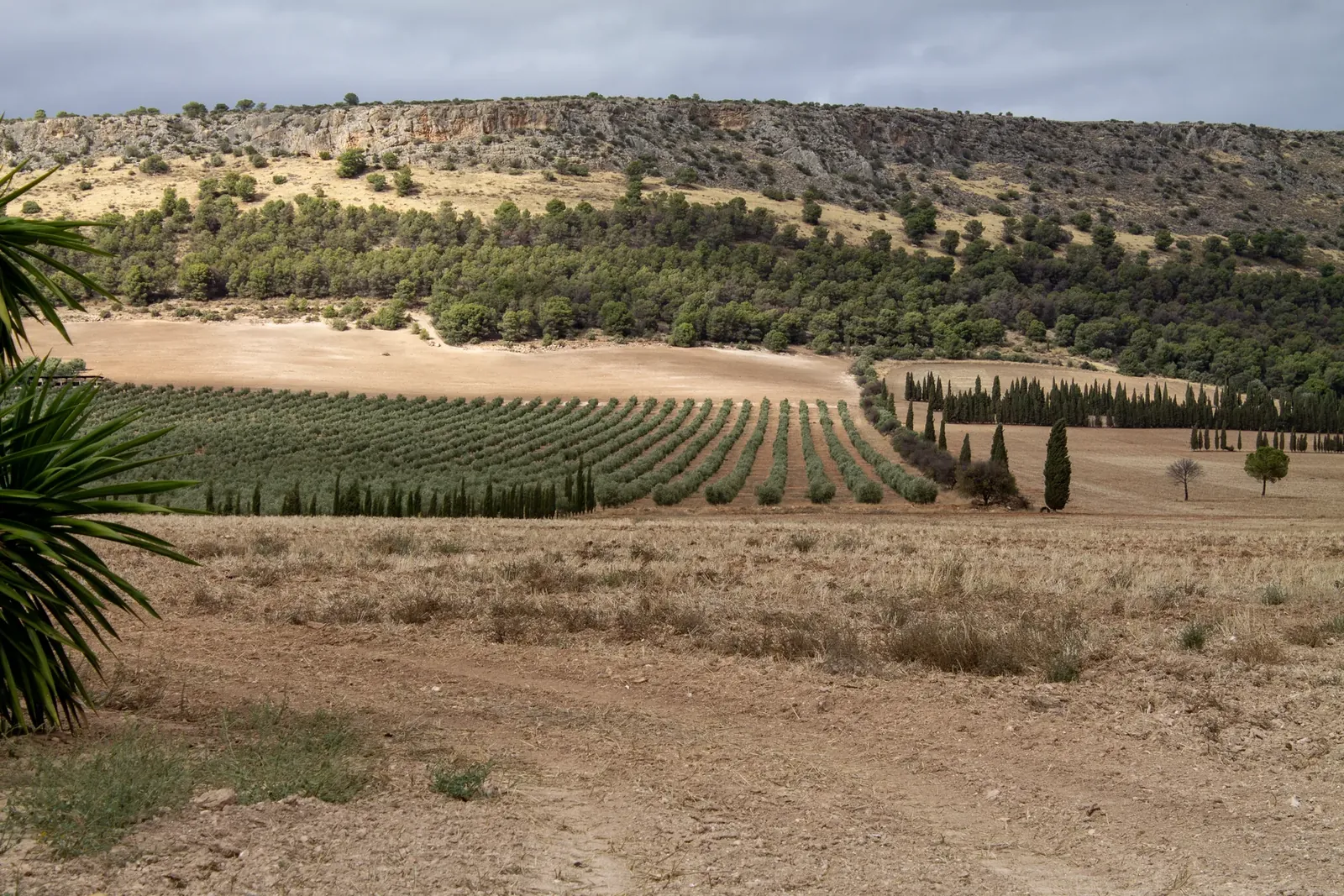
Ours, as the worked example: N.I.C.A. 67331 (Número de Identificación del Centro Autorizado, the number given to an authorised centre in Andalusia), entered for atención sanitaria a drogodependientes (healthcare for people with drug dependence) and authorised by the Junta de Andalucía. The registered operator is Sierra Recovery Services S.L. That makes us a registered health centre with a supervised treatment residence, and it expressly does not make us a hospital, a detox unit or a psychiatric hospital. One centre, at Cortijo Ferradores, Humilladero, Málaga, with no branches. You can look the entry up yourself without asking us anything.
One warning while you are looking. A tourism permit for a holiday let is not a health authorisation, and the two get confused constantly.
Checking us, not just taking our word
N.I.C.A. 67331, Junta de Andalucía. Look it up, then call us with whatever it raises.
What a Spanish health authorisation does not cover
The phrase "medically supervised detox" appears on Spanish centre websites whose authorisation does not extend to it.
A registration to provide addiction care in a residential setting is not a hospital licence, and it does not authorise medically supervised detoxification. Because authorisation is granted per care unit, hospital level withdrawal management sits in a different category altogether, held by facilities authorised for hospitalisation. Real Decreto 1277/2003 separates centres with hospitalisation from those without, at the top of its classification.
A centre can hold one authorisation and not the other, and most residential addiction centres hold the one that does not include a hospital bed. Where a centre holds the same class of registration we do and still offers an on-site withdrawal from alcohol or benzodiazepines, it is offering something outside what that registration permits.
Detoxification and rehabilitation are two different things, and conflating them is how people end up in the wrong building. Detox clears the substance from the body under medical supervision, over days. Rehabilitation is the therapy that follows, over weeks.
That distinction is not bureaucratic. NICE guidance CG100 tells clinicians to offer admission to hospital for medically assisted withdrawal to anyone in acute alcohol withdrawal who is experiencing, or is at high risk of developing, withdrawal seizures or delirium tremens. CG115 sets the severity threshold: a score above 30 on the SADQ, the standard questionnaire for rating how severe alcohol dependence is, suggests severe dependence, and those people will typically need assisted withdrawal in an inpatient or residential setting, with a lower threshold again for people who are older or homeless.
Withdrawal from alcohol and from benzodiazepines can cause seizures, and delirium tremens is a medical emergency. A building with a nurse who visits is not the setting either guideline describes. Nobody should stop drinking, or stop benzodiazepines or opioids, abruptly and unsupervised. Speak to a doctor first, and if you are in Spain already, speak to one there. In an emergency in Spain, call 112.
So our model is the one our authorisation describes. Where a medically supervised withdrawal is clinically needed, it happens in an appropriate medical setting before admission, arranged as its own booking and billed separately. Where that hospital is in Málaga province, one of our therapists attends the ward and begins therapy before discharge, so the person does not arrive here starting from nothing. Qualified nurses are part of the team during the residential stay, and the programme runs here.
The honest trade-off is a second booking and a second bill, and it is slower than a centre that tells you it can do the whole thing under one roof. It is also the version that matches what we are allowed to do. Our pathway is set out on medical assessment and detox.
What does residential treatment actually involve?
When you are paying for this yourself, the only figure worth comparing is how much structured clinical contact the fee buys in a week. Here is ours, in full, so you have something to hold other quotations against.
Twenty-eight days residential, with a fourteen-day minimum and longer stays available.
A programme day carries three structured therapy groups: a process group, a therapeutic group and a psychoeducation group. An afternoon group activity and a day closing bring that to five group contacts in a day. Five programme days a week, with three individual sessions a week alongside them.
The psychoeducation curriculum runs to seventeen modules covering relapse, trauma, family patterns and living without the substance. Saturday is holistic and body-based work, Sunday a supervised excursion. Groups are small, which is the point of them.
On duration, the uncomfortable fact. NIDA's research guide reports that most people need at least ninety days of treatment to significantly reduce or stop drug use, and that longer treatment is often indicated. That refers to time in treatment, not necessarily ninety continuous days as an inpatient; treatment can change in intensity and setting as a person's needs change. That is a US research finding rather than a NICE recommendation. A twenty-eight day residential stay is not automatically inadequate on those grounds, and a longer stay is not automatically better. It is the opening of a longer arrangement rather than the whole of it.
What is treated. Substance dependency, behavioural addictions including gambling and gaming, and co-occurring mental health conditions including depression, anxiety, PTSD, trauma and burnout. Not standalone eating disorders, and not under-eighteens other than by exception.
The exclusions matter more than the inclusions, and a centre that will not put its exclusions in writing before taking a deposit is telling you something. We cannot admit:
- Anyone needing a supervised withdrawal that has not already been arranged and completed
- Anyone whose physical health needs hospital level monitoring or nursing
- Anyone acutely suicidal, acutely psychotic or in psychiatric crisis
- Anyone needing detention, intensive psychiatric nursing or a locked setting
The programme in detail sets out the rest.
The therapies, and what stands behind them. Cognitive behavioural therapy is the core, with dialectical behaviour therapy, EMDR and somatic work where trauma sits underneath the substance use, family therapy where the household is affected, and a written relapse prevention plan before discharge. The mix is set at assessment.
Two of these carry guideline weight by name. NICE NG116 recommends trauma-focused CBT and EMDR as first-line psychological treatments for PTSD, ahead of medication. NICE CG51 sets out when residential treatment should be considered at all: for people seeking abstinence with significant co-occurring physical, mental health or social problems, who plan to complete a detoxification programme, and who have not benefited from community-based treatment. Measure yourself against that before spending anything.
Where a mental health condition sits alongside the addiction, both belong in one treatment plan. NICE NG58 exists because coordination between mental health and substance services is where people fall through. Ask any centre whether it treats both or refers one out. Ours is on dual diagnosis.
The programme adapts the methodology of PROMIS Clinics, in use in the United Kingdom since 1986. Our founder is a partner in Sierra Recovery Services S.L. and Managing Director of PROMIS Clinics. Two separate companies, neither owning the other.
What does private rehab in Spain cost, and what moves the price?
GBP 9,900 for twenty-eight days, private room included, published on the site rather than quoted on request.
What sits outside that figure:
- Medically supervised detox, where clinically needed
- Medical, psychiatric and laboratory costs
- Hospital care of any kind
- Travel
An itemised written quotation is issued before admission, so the number you agree is the number you pay. Our pricing page carries the full list, and it is worth comparing exclusion lists rather than headline figures when you gather quotes.
Quotes for what sounds like the same month vary widely, and four things account for most of it: length of stay, staff-to-client ratio, whether detox is bundled into the headline figure, and how much of the fee is the building rather than the clinical hours. Ask how many clinical hours a week the fee buys and the picture resolves quickly. If you want the working, we publish what a month costs to run.
One more thing to ask anyone, including us. Paying privately means the money is yours, so it is worth knowing who else is taking a share of it. An investigation into UK addiction helplines that presented themselves as free and impartial found they were being paid undisclosed commission by the clinics they recommended. That money comes out of somebody's fee and buys nothing clinical. On the professional side, GMC guidance is explicit that doctors should not accept fees for referring patients to particular organisations, so a clinician taking a placement fee is in breach of professional standards rather than merely doing something distasteful. Ask any centre, and any adviser, whether they pay or accept referral fees. We do neither, in either direction.
Want an itemised quotation before you commit?
We publish our price. Hospital detox and medical costs are billed separately and quoted up front.


Spain compared with the UK, on four axes rather than one
Most people compare on price, because price is the only axis anybody gives them. There are four.
| What you are comparing | United Kingdom | Spain |
|---|---|---|
| Cost of a 28-day residential stay | No official price table exists. Commonly quoted private ranges run well above the Spanish published figure | Sierra publishes £9,900 for 28 days with a private room, hospital detox arranged and billed separately |
| Who authorises the centre | The Care Quality Commission in England, with separate regulators in Scotland, Wales and Northern Ireland | The health department of the autonomous community, entered on REGCESS and on the regional register. In Andalusia the identifier is the NICA |
| Where a complaint goes | The regulator, and in some cases a UK ombudsman | The health department of the autonomous community that issued the authorisation. Not the CQC, and not a UK ombudsman |
Both regulators are public and checkable, and the honest difference is what they publish. The CQC publishes a judgement about quality. The Spanish registers publish an authorisation, which tells you what a centre is permitted to do and not how well it does it. That gap is exactly the work a private payer has to do themselves.
Distance is what the table understates, in both directions. Putting real space between a person and the environment they were using in does genuine clinical work, and it is not a matter of scenery. Your family is also further away for the month, and aftercare has to be deliberately arranged rather than assumed. On cost, the honest framing is good value relative to the UK rather than cheap.
One question almost nobody raises before departure. If something goes wrong and you want to complain, the route is the health department of the autonomous community that issued the authorisation, not the CQC and not a UK ombudsman. Knowing that in advance is worth more than being reassured about it afterwards. Your passport must also be less than ten years old on entry and valid for three months beyond departure, and prescribed controlled medication needs its original packaging and paperwork, both of which are covered on going to rehab abroad from the UK. For the comparison in full, see rehab in the UK versus Spain.
Talk it through with a clinician
A straight conversation about whether residential treatment is right, and what it would involve.
What happens when the month ends?
The month is the part everyone plans and the part that matters least on its own.
NIDA's ninety-day finding, cited above, makes a twenty-eight day residential stay the opening of a longer arrangement rather than a finished course of treatment. So the question worth asking any centre abroad is not what happens during the month. It is what is written down about the month after, and whether it is inside the fee you are about to pay.
Ours runs like this. Continuing care follows the person home: online one-to-one sessions with the lead clinician, weekly virtual groups, in-person sessions in London, and a written relapse prevention plan agreed before discharge. With consent, we send a written handover to your GP. All of it is agreed before you leave rather than arranged once you are back and struggling.
The generic version, which you can use with anyone: ask for the aftercare arrangement in writing before you pay a deposit, and ask specifically who delivers it, how often, for how long, and whether it is included in the fee or billed on top. Aftercare and discharge sets out ours.
If you want to test any of this against your own situation, ask for an assessment. It is a free telephone assessment with a clinician rather than a salesperson, on +44 20 3948 8938, and if we are not the right centre for you we will say so and tell you why.
Sources and verification
- Spanish registers and law: REGCESS, the national register, and the Ministerio de Sanidad page explaining its legal basis; Real Decreto 1277/2003 and its March 2026 amendment; the Junta de Andalucía authorisation page and its public consultation tool; the Comunitat Valenciana, Madrid, Catalonia and Balearic registers.
- Clinical guidance: NICE CG100 and CG115 on alcohol withdrawal; CG51 on residential treatment; NG58 on coexisting mental illness and substance misuse; NG116 on PTSD; NIDA's Principles of Drug Addiction Treatment on treatment duration.
- Funding: the NHS S2 route; the NHS GHIC page; MoneyHelper on private medical insurance.
- Referrals and commission: the investigation into UK addiction helplines paid undisclosed commission; GMC guidance on conflicts of interest.
- Our own entry: N.I.C.A. 67331, Junta de Andalucía, set out on regulation and licensing.
- The UK price ranges above are commercial directory figures. No NHS, OHID or gov.uk source publishes a price table for private residential treatment, which is why they are labelled in the table rather than listed here.
Frequently asked questions
What does private rehab in Spain mean?
Private rehab in Spain is residential addiction treatment paid for by the person or their family rather than by a state health service. Private does not mean unregulated. Any centre lawfully providing it holds a health authorisation from the autonomous community it sits in, granted under the same national framework that governs hospitals, and recorded on a public register that anyone can search.
How do I check a Spanish rehab is licensed?
Ask for two things: the registration number and the exact registered company name. Search both on REGCESS, the national register, or on the register of the region where the beds actually are. Then read which care units the entry authorises rather than treating the existence of an entry as the answer. Check whose name it is in, and when it was granted.
Will the NHS or my insurance pay for rehab in Spain?
Almost certainly not. The NHS S2 route funds planned treatment abroad only from public providers, never private ones, and only with approval granted before you travel. A GHIC or EHIC covers state healthcare that cannot reasonably wait until you get home, and explicitly not treatment in a private facility. UK private medical insurance commonly excludes addiction treatment, overseas treatment, or both.
Can a Spanish rehab detox me on site?
Only if it holds the authorisation for it. Spanish authorisations are granted per care unit, so an authorisation to run residential addiction care is not an authorisation to run medically supervised withdrawal, and a centre can hold one without the other. Ask which units its register entry lists, who provides medical cover, and which hospital it uses.
How much does private rehab in Spain cost?
Our published price is GBP 9,900 for twenty-eight days, private room included. Medically supervised detox where clinically needed, medical, psychiatric and laboratory costs, hospital care of any kind and travel all sit outside that figure and are billed separately. Among the Spanish centres that publish a price at all, few published prices sit below that figure, and quotes rise steeply from there.
Is treatment available in English?
At our centre, throughout. Group therapy, individual sessions, the psychoeducation modules and the written relapse prevention plan are all delivered in English by an English-speaking clinical team. Across Spain it varies a great deal. Ask specifically whether the clinical sessions are in English rather than only the admissions call, and whether that still holds when your usual therapist is away.
How long does private rehab in Spain last?
Twenty-eight days is the standard residential stay here, with a fourteen-day minimum and longer stays available. NIDA's research guide reports that most people need at least ninety days of treatment, which refers to time in treatment rather than ninety continuous days as an inpatient, and which is a US research finding rather than a NICE recommendation. Read it as the argument for structured aftercare that continues at home, not as an argument for a longer bill or as a verdict on a twenty-eight day stay.
What happens if something goes wrong while I am in Spain?
Complaints about a Spanish centre go to the health department of the autonomous community that issued its authorisation, not to the Care Quality Commission and not to a UK ombudsman. Ask before admission who the responsible clinician is, what the escalation route is out of hours, and which hospital the centre uses in an emergency. In an immediate emergency anywhere in Spain, call 112.
What should I ask a Spanish centre before I pay a deposit?
Six questions, in this order:
- What is your registration number and your exact registered company name?
- Which care units does that entry authorise, and when was it granted?
- Who provides medical cover, and where does a medical emergency go?
- What is included in the fee, and what is billed separately?
- Do you pay or accept referral fees, in either direction?
- What is the written aftercare arrangement, who delivers it, and for how long?
Talk to a clinician
The assessment is free and it is by telephone. If we are not right for you, we will say so and tell you where to look.
 +
+
Talk to a clinician today
You will speak to our admissions team, English-speaking clinicians who know the programme and the people in it. Callback within 24 hours.
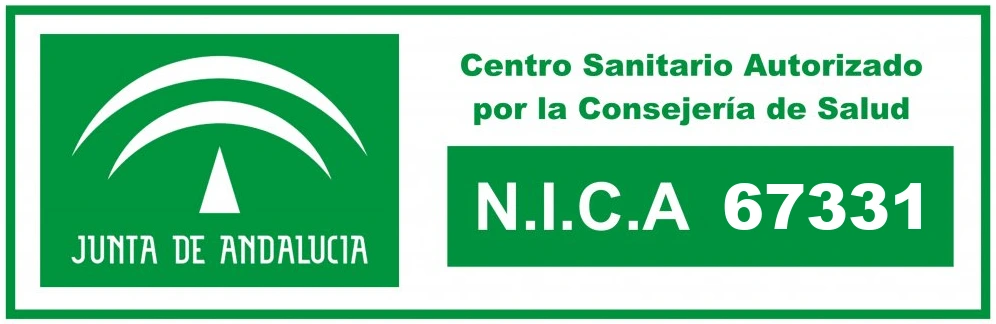
Registered health centre. Authorised by the Junta de Andalucía, N.I.C.A. 67331.