Home / Local treatment guides / Ibiza
Treatment options in Ibiza
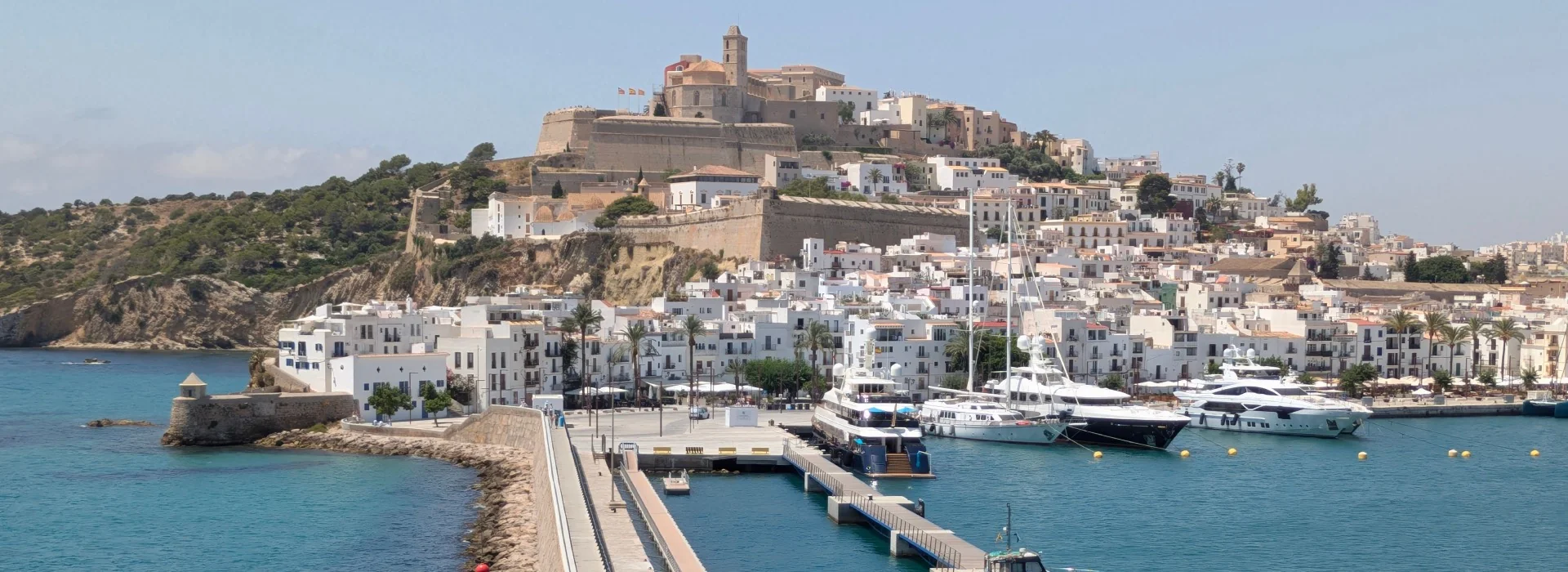
Rehab in Ibiza: what is actually here, all year round
What actually exists on Ibiza, how the Balearic health register works and how to check a centre against it, and the part almost nobody plans for, which is leaving the island and then coming back to it.
Stopping alcohol or benzodiazepines abruptly can be dangerous if you are physically dependent, and severe withdrawal can include seizures. Get medical advice before you cut down or stop. In a life-threatening emergency in Spain call 112. In the UK call 999, or NHS 111 for urgent advice.
Ibiza has a free public outpatient addiction service, a dual-pathology day hospital, and one confirmed English-language AA meeting a week. Anything more intensive is a referral onward. Treating addiction on this island requires a Balearic health authorisation under Decreto 100/2010, which means an Andalusian or other mainland registration counts for nothing here. The island has 164,265 residents and held 316,843 people at the August 2025 peak. Its addiction services are sized for the first number.
Searches land here under several names: rehab in Ibiza, alcohol rehab in Ibiza, drug and alcohol rehab Balearics, detox Ibiza. What follows does not change depending on which one you typed.
Speak to a clinician about treatment options from Ibiza
Confidential, no obligation, and no referral fee is paid to anyone for sending you here.
The island doubles in summer, and so does everything you are trying to avoid
On 12 August 2025 there were 316,843 people on the island of Ibiza. The resident population, counted on 1 January that year, was 164,265. The island had roughly doubled, and it does that every year.
That swing sets up everything else on this page. Ibiza took 3.39 million tourist arrivals in 2025, close to nine in ten of them between May and October, and the workforce moves with the visitors. In July 2026 the island recorded 64,964 people paying Social Security contributions, 6.5 per cent more than a year earlier, and that figure falls back once the season closes.
If you work inside that economy, the environment is not a background detail. Your shift ends when other people's day begins, your colleagues are using, your accommodation may belong to your employer, and the places you would need to stay away from are the places you are paid to stand in.
There is measured evidence that this environment changes behaviour rather than simply attracting people who already behave that way. A study of young British visitors published in the International Journal of Drug Policy in 2000 found that among those using ecstasy, the proportion doing so weekly or more often rose from 2.9 per cent at home in the UK to 42.6 per cent while they were on the island.
That is the mechanism clinicians call cue conditioning. The National Institute on Drug Abuse describes people, places, things and moods present during earlier use becoming conditioned stimuli, so that encountering them again produces craving by itself. They are among the most common triggers for a return to use.
Then the season ends. The shifts stop, the income stops, the company leaves, and the structure that was holding a heavy pattern in place disappears inside a fortnight. Drinking that was functional in June is frequently not functional in November, and November is also the easiest month of the year to be somewhere else.
What exists on the island, in season and out of it
Free addiction treatment in Ibiza comes first here, because most people working a season on this island do not know it exists.
The Unitat de Conductes Addictives, run by the Consell d'Eivissa at Cas Serres in Eivissa, is the island's public outpatient addiction service. It carries out medical, psychological, social and toxicological assessment of substance abuse and dependence, works with families, runs outpatient treatment programmes, and refers onward to hospital detoxification units and therapeutic communities when more is needed. Behavioural addictions are within its remit, gambling among them. The address is C/ Cosme Vidal Llàser, the number is 971 19 56 21, and the email is cad@conselldeivissa.es.
Around it sits IB-Salut's Àrea de Salut d'Eivissa i Formentera, the territorial health area built around Hospital Can Misses and seven basic health zones, and primary care is the normal way in. Can Misses also runs a dual-pathology day hospital for people living with a severe mental health condition alongside an addiction. The Conselleria de Salut publishes PADIB, an official directory of Balearic addiction resources listed island by island, and there is a telephone information line, CRIDA, on 971 177 848.
Two honest caveats. The official pages for these services are published in Catalan and none of them states which languages appointments are actually conducted in, so ask rather than assume. And they are built for people inside the Balearic system. A UK GHIC or EHIC covers healthcare that becomes necessary while you are travelling and explicitly does not cover going abroad for planned treatment, which is the position a seasonal worker who never registered here usually turns out to be in.
The structural point is easy to miss, and it belongs on this page rather than any other. This network is sized for the resident population. It does not double in August. The month with the most people, and the highest alcohol and drug consumption, is served by the same outpatient service as the month with the fewest.
Residential capacity here is limited, and the clearest evidence of that sits in the law itself. When Ley 10/2018 wrote a narrow exception into the Balearic health rules for the Hospital Residencia Asistida Cas Serres, it justified the exception by describing that hospital as the only medium and long-stay hospital facility on the island. Private provision on Ibiza is correspondingly weighted towards outpatient psychology and psychiatry, so the residential rehabilitation treatment options on the island are few, and any treatment centre you are offered should be checked against the register before you pay a deposit. Prices at the top of the Balearic market reach figures that have very little to do with clinical intensity, and we set out where that money goes in our breakdown of the luxury segment and in what a month of treatment actually costs to run, rather than repeating the numbers here.
Meetings on Ibiza, and what they look like in February
This is the only thing on this page that is free, open to anyone and there every week of the year.
The English-language Alcoholics Anonymous group, Ibiza International, meets on Friday evenings from 18:30 to 19:30 at the Mare de Déu del Roser i Sant Ciriac parish, Carrer del País Valencià 16 in Eivissa, upstairs in room 4. The group answers on +34 646 351 680, including on WhatsApp. That listing was last updated on the European AA meeting finder in April 2026. Older listings have shown a second midweek meeting, which we could not confirm, so confirm with the group before you make the trip across.
Narcóticos Anónimos runs a separate group at the annexe of the Nuestra Señora del Rosario church off Avinguda d'Isidor Macabich, on Tuesdays at 20:00 and Fridays at 20:30, contactable on 656 472 158. It is listed through the Spanish-language fellowship, so ask about language before you go.
One confirmed English-language meeting a week is a real resource and a thin one. It is worth being clear about what happens to it seasonally, too. The population that fills a room in August is largely gone by November, while the people who most need a room in November are the ones who stayed. If mutual aid is going to be the structure that holds your recovery together, that thinness is a fact to weigh rather than a detail to skip past.
Decreto 100/2010: how a centre gets authorised in the Balearics, and how to check
Ask a centre what its programme includes and you will have an answer inside a minute. Ask whether it is legally permitted to run it and the conversation changes shape. On an island where a lot of therapeutic-sounding activity happens inside rented villas, the second question is the useful one, and the answer differs from the mainland's.
What the decree actually does
Treating addiction is a regulated health activity throughout Spain. The national framework, Real Decreto 1277/2003, sets a common classification of health centres, services and units and leaves the granting of authorisations to each autonomous community.
In the Balearics that instrument is Decreto 100/2010, de 27 de agosto, which regulates health authorisation and the operation of the Registre de Centres, Serveis i Establiments Sanitaris de les Illes Balears. Ley 10/2018, published in the BOE on 13 November 2018, amended it. The Direcció General d'Investigació en Salut, Formació i Acreditació, inside the Conselleria de Salut, resolves applications within three months, and silence counts as refusal.
The consequence is blunt. Andalusia and the Balearics run separate procedures and separate registers, so an Andalusian N.I.C.A. number is not a Balearic authorisation. That cuts both ways, and it includes us: our own N.I.C.A. 67331 authorises a centre in Málaga province and would authorise precisely nothing on Ibiza.
Installation and functioning are two different authorisations
The decree separates them. Under Article 4.1, an autorización de instalación is required before premises are built or adapted for a new centre with inpatient capacity, or before substantial structural work. An autorización de funcionamiento is the separate permission to carry out the activity at all, and it has to be in place before the centre operates.
So a centre can own a document, show you a document, and still not hold the one that matters.
The ten-year clock, and what an entry contains
Article 16.1 sets the term. A functioning authorisation, and the registration that follows from it, run for ten years, after which renewal has to be sought. Every valid entry therefore carries a date, and that date can be checked.
Article 20.5 sets out what the register records: the name and type of centre, who holds it, the healthcare services it offers, the date and grade of its accreditation, and any renewal, revocation or expiry. The entry does not simply say yes or no. It says what the centre may do, which is the part people skip.
REGCESS, the national register kept by the Ministerio de Sanidad, is fed from each region's registry and can be searched by autonomous community. It is where to start when checking a Balearic centre from a laptop in the UK.
What is not a health authorisation
A tourist-letting permit. A dwelling let to visitors here holds an estancia turística en vivienda, an ETV, granted under Ley 8/2012 del Turisme de les Illes Balears and recorded in the island's tourism registry. It says nothing about anyone's fitness to treat addiction. A villa operating on one is a legally let holiday home that therapists visit.
A registration in somebody else's name. An entry held by a visiting psychologist, a separate practice or an associated company does not cover the house you would sleep in. It has to belong to the centre, at the address where you would stay.
An outpatient psychology entry. A consulting practice is a genuine health registration. It does not permit a residential addiction programme, and it certainly does not permit a medical detox.
Accreditations and memberships. Certificates from private associations are marketing. They are not law, and no public register recognises them.
Five questions to ask, in writing
The exact registered company name and the registration number. Trading names and registered names are routinely different, which is the whole reason to ask for the registered one, and it lets you find the entry yourself.
Whether the entry sits in the Balearic register kept by the Conselleria de Salut. Mainland registers do not reach beds on this island.
Whether it is a functioning authorisation, and which services the entry lists. Outpatient consulting is one thing, a residential unit another, a medical detox a third.
The date on the entry, and when its ten years expire.
Who provides medical cover, where that person physically is, and during which hours. Then ask what happens overnight, and how long it takes to get someone from that address to Can Misses.
One caveat that saves wasted effort. Unit codes are set region by region, so do not ask an Ibiza centre for an Andalusian code. What transfers is the principle, not the reference number: every region issues an authorisation naming the clinical activity a centre may carry out, and the entry either exists in that region's register or it does not. Our Marbella guide works a mainland example through in full, our own entry is set out on this site, and our guide to private treatment in Spain covers verification wherever in the country you are looking.
An authorised centre hands over the number without hesitating, since the entry is public anyway. Hesitation tells you something on its own, and asking costs nothing.

Talk it through with a clinician
A straight conversation about whether residential treatment is right, and what it would involve.
Getting off the island, and why the month you choose matters
Ibiza airport handled 9,138,224 passengers in 2025. In December it handled 235,942. Those two figures are the entire travel argument on this page.
In summer the island is connected to most of northern Europe. In winter the timetable contracts onto the routes that function as hubs, principally Barcelona, Madrid and Palma, with a much reduced set of international services beyond them. The Málaga link follows the same shape. Sixteen direct weekly flights were scheduled for July 2026, roughly 1h20 in the air across about 600 km, while outside the season the journey more often needs a connection through Barcelona or Madrid.
By sea, Dénia is the quickest mainland crossing at a little over two hours, Valencia takes around five, and Barcelona around nine. The Dénia sailing runs all year, typically leaving in the late afternoon and arriving early evening, with a second morning departure added for the summer. The Barcelona sailings run less often in winter, although we could not confirm the exact winter frequency against the operator's own published schedule, so check that one directly.
None of this makes travel difficult. It makes it something to book rather than improvise, and the two halves of the problem pull against each other. Winter is the easiest time of year to be away from Ibiza and the thinnest timetable to leave on, which is an argument for fixing the month early rather than late.
If you are or may be physically dependent, your physical health sets the order, and it is not a matter of preference. Medical advice first, then a medically supervised detox in an appropriate medical setting, then a residential programme.
Withdrawal symptoms from alcohol or benzodiazepines can include seizures. Do not plan to dry out on a ferry or in a departure lounge. Our page on medical assessment and detox sets out how that sequence is arranged.
Coming back: continuity of care on a seasonal island
Twenty-eight days is the short part. What decides whether it worked is the six months afterwards, and the evidence there is not ambiguous.
The National Institute on Drug Abuse puts relapse in substance use disorders at 40 to 60 per cent, comparable with high blood pressure and asthma, and treats it as a signal to resume or adjust treatment rather than as a personal failure.
What separates the plans that hold from the ones that do not is well described. Reviewing continuing-care trials, McKay found the interventions with positive effects were those planned to run longer, those that actively reached out instead of waiting, and those that kept monitoring going over an extended period. NICE points the same way for moderate to severe alcohol dependence: case management, where provided, should run through the whole period of care including aftercare, and its quality standard expects relapse-prevention support as soon as appropriate after a withdrawal managed in hospital.
On Ibiza that principle acquires a calendar. Someone discharged in March comes home to a quiet island, a manageable diary and a meeting where the same faces appear each week. Someone discharged in June comes home to a workplace that is a nightclub.
The clinical content of the plan is identical in both cases. The difficulty of carrying it out is not.
Worth settling before you leave rather than after you get back:
The return date, chosen against the season rather than the month that happened to be convenient.
Where you will live. If the accommodation came with the job, going back to the job and going back to the accommodation are one decision.
The fixed points in the week. The Friday AA meeting and the NA group run every week of the year. Build around those.
A named clinician you have already spoken to, rather than a service you intend to find in a crisis.
A written handover, so whoever picks you up, the UCA or a doctor at home, is not starting from nothing.
Continuing care after discharge here runs online, and we write to your GP with your consent. Our aftercare and discharge page sets out what that involves. What matters is that the next stage of the recovery process is arranged before you fly.
Where we actually are: Humilladero, Málaga province
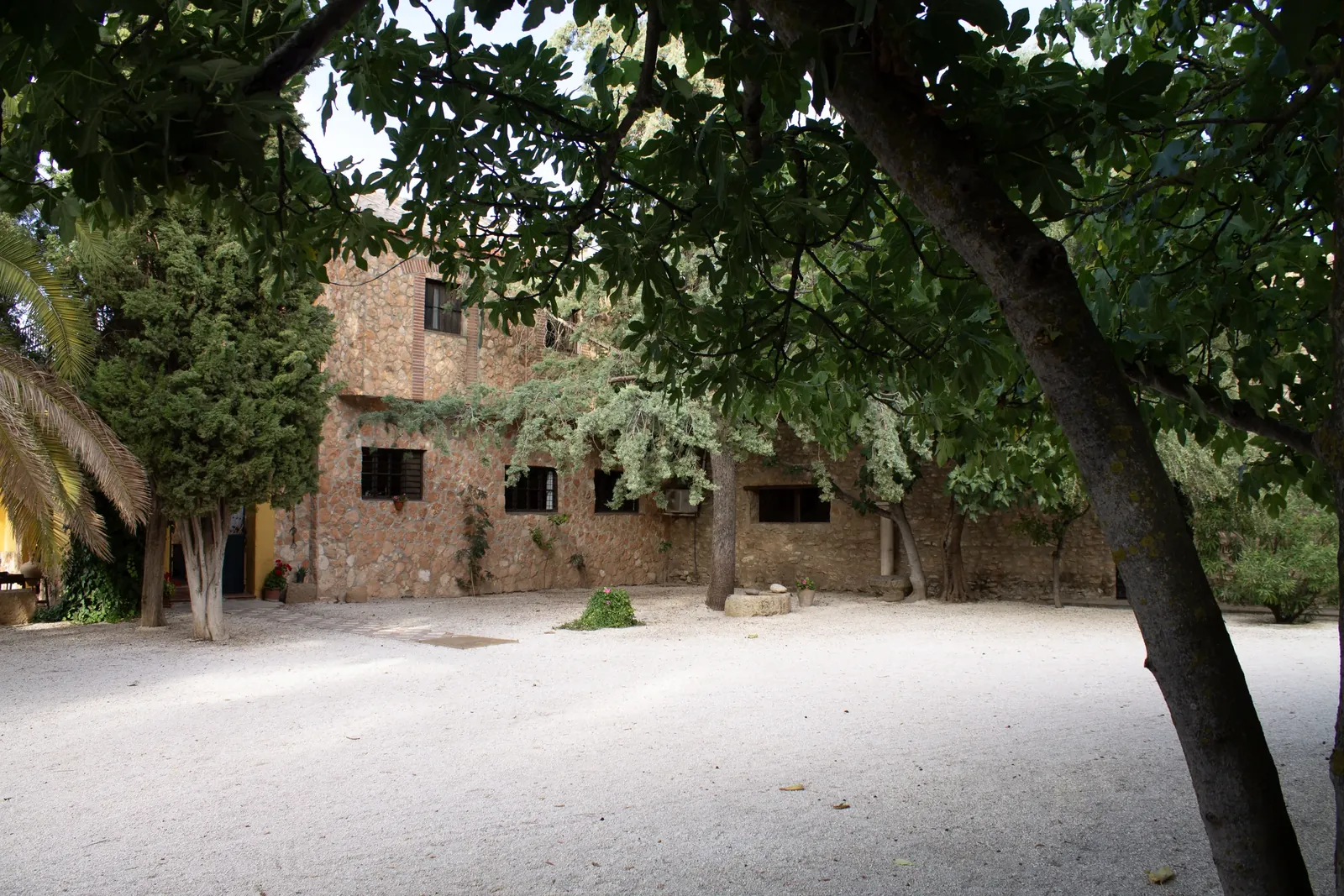
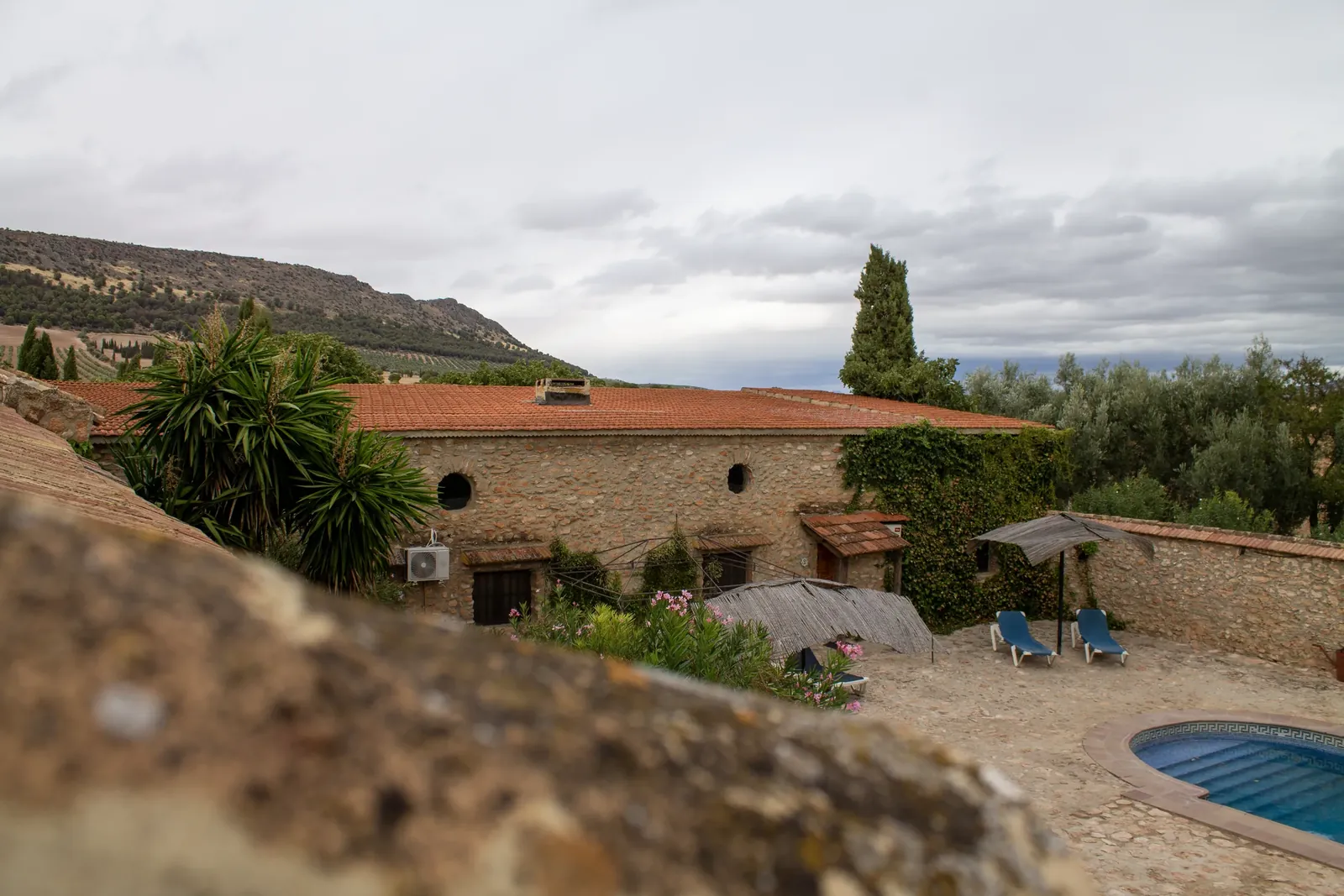
We are not on Ibiza. The centre is at Cortijo Ferradores in Humilladero, in Málaga province on the Spanish mainland, roughly forty-five minutes inland from Málaga airport, and transfers from the airport are arranged for you.
Our entry sits in the Andalusian register. The number is N.I.C.A. 67331 and the authorised activity is atención sanitaria a drogodependientes, care for people with drug dependence, making this a registered health centre with a supervised treatment residence. It is not a hospital and it is not a detox unit, so a medically supervised detox, where clinically needed, is completed in an appropriate medical setting before admission and billed separately. You can look it up on the public register before you speak to anybody here.
By the logic of the section above, that authorisation would count for nothing if the beds were on Ibiza. It counts because they are in Málaga province.
The programme runs twenty-eight days. Each day carries three structured group therapy sessions plus a group activity in the afternoon. Each week carries three one-to-one sessions. Running through all of it is a seventeen-module curriculum adapting the methodology of PROMIS Clinics, in use in the United Kingdom since 1986. Co-occurring mental health conditions, depression, anxiety, PTSD and burnout among them, are considered as part of the same treatment plan. Our programme page sets out what the days contain.
The published price is £9,900 for the twenty-eight days, private room included. Hospital detox, medical, psychiatric and laboratory costs and travel are billed separately, with an itemised written quotation issued before admission. We neither pay nor accept referral fees. The full breakdown is on our pricing page.
One practical note for anyone arriving straight out of a season. The hard part of the first week is rarely the therapy. It is the quiet. Nothing here happens at four in the morning, and after years organised around the opposite, that takes adjusting to.


Which route fits your situation
If you are registered in the Balearic health system, start with your health centre and the Consell d'Eivissa UCA. It is free, it is the correct first call, and for a good number of people the public route plus meetings is enough on its own.
If you are a seasonal worker who never registered, the public route is largely closed to you and a GHIC will not open it, because it does not cover planned treatment. Realistically that leaves going home or paying privately. In the meantime the CRIDA line and the meetings cost nothing and are available this week.
If you live here year round and the island itself is not what is driving it, the public route and the two weekly meetings are a reasonable place to start, with the residential question held in reserve. Build the week so that it survives February, not so that it works in August.
If the island is the problem, the environment argument at the top of this page applies to you, and leaving is the point of the exercise rather than an upgrade to it. That is a decision about geography, not about anyone's standard of care. If you are weighing the other Balearic option rather than the mainland, our Mallorca guide covers what is available there.
If you may be physically dependent, nothing else on this list happens first. Medical advice, then a supervised detox, then a programme.
Whatever you choose, the season sets the timetable. Weigh the treatment options against the calendar, and decide the month before you decide the centre.
Sources and verification
- Decreto 100/2010, de 27 de agosto, Illes Balears, health authorisation procedure and the Registre de Centres, Serveis i Establiments Sanitaris. Articles 4.1, 13.2, 16.1 and 20.5 · Ley 10/2018, BOE, 13 November 2018, amending it
- Real Decreto 1277/2003, the national framework on authorisation of health centres, services and establishments
- Govern de les Illes Balears, the authorisation and renewal procedure, competent directorate and resolution period · REGCESS, Ministerio de Sanidad, the national register searchable by autonomous community
- Ley 8/2012 del Turisme de les Illes Balears, the tourist-letting regime under which an ETV is granted
- Consell d'Eivissa, Unitat de Conductes Addictives · IB-Salut, Àrea de Salut d'Eivissa i Formentera · PADIB, the Balearic directory of addiction resources
- INE, island population at 1 January 2025 · IBESTAT, tourist arrivals and the Human Pressure Index peak of 12 August 2025
- Aena, Ibiza airport passenger figures for 2025 including the December total
- NHS Business Services Authority, what a UK GHIC or EHIC does and does not cover, and the S2 route for planned treatment
- National Institute on Drug Abuse, conditioned cues and relapse triggers · NIDA, relapse rates compared with other chronic conditions
- NICE CG115, case management across the whole period of care including aftercare · NICE QS11, statement 5, relapse prevention after a withdrawal managed in hospital
- The continuing care model of substance use treatment · McKay, what continuing care research has established about duration, outreach and monitoring
- Bellis MA, Hale G, Bennett A, Chaudry M, Kilfoyle M, Ibiza uncovered: changes in substance use and sexual behaviour amongst young people visiting an international night-life resort, International Journal of Drug Policy 11 (2000) 235 to 244
- European AA meeting finder, Ibiza International, listing updated April 2026 · Narcóticos Anónimos, Grupo Ibiza
- Emergency numbers: 112 in Spain, 999 in the UK, NHS 111 for urgent non-emergency advice
- Junta de Andalucía register, Sierra Recovery, N.I.C.A. 67331 · Sierra pricing · Sierra licensing
Figures and listings checked on 10 August 2026. Meeting times, telephone numbers, timetables and prices change, and the winter frequency of the Ibiza to Barcelona ferry could not be confirmed against the operator's own schedule, so confirm each on the official page before you rely on it.
Frequently Asked Questions
Is there a rehab on Ibiza?
Public addiction treatment in Ibiza is outpatient. It runs through the Consell d'Eivissa Unitat de Conductes Addictives and IB-Salut's Àrea de Salut d'Eivissa i Formentera, with a dual-pathology day hospital at Can Misses, and anything more intensive is referred onward to hospital detoxification units and therapeutic communities. Private provision on the island is also weighted towards outpatient work. Any residential rehab in Ibiza needs a Balearic authorisation, so check the register first.
Is a rehab on Ibiza regulated the same way as one on mainland Spain?
No. The Balearic Islands run their own authorisation procedure and their own register under Decreto 100/2010, amended by Ley 10/2018. Andalusia runs a separate one. Both sit on the national framework in Real Decreto 1277/2003, but an authorisation granted under one region's procedure does not carry over into the other.
How long does a Balearic health authorisation last?
Ten years. Article 16.1 of Decreto 100/2010 gives a functioning authorisation and the registration that follows from it a validity of ten years, after which renewal must be sought. The register entry also records what services the centre is authorised to provide, so ask for the date and the scope, not just the number.
Does a holiday-let licence mean a villa on Ibiza can treat addiction?
No. An ETV, estancia turística en vivienda, is granted under Ley 8/2012 del Turisme de les Illes Balears and recorded in the island's tourism registry. It authorises letting a dwelling to visitors. It is not a health authorisation and carries no health-sector status at all.
Can I get free addiction treatment on Ibiza?
Yes, if you hold Balearic health-service registration. Care runs through your health centre and the Consell d'Eivissa Unitat de Conductes Addictives. A UK GHIC or EHIC covers treatment that becomes necessary during a visit and does not cover coming abroad for planned treatment, so it will not open that door for a visitor or an unregistered seasonal worker.
Are there English-language meetings on Ibiza?
There is one confirmed English-language AA meeting for people recovering from alcohol addiction, Ibiza International, on Fridays from 18:30 to 19:30 at the Mare de Déu del Roser i Sant Ciriac parish in Eivissa, reachable on +34 646 351 680. A Narcóticos Anónimos group meets on Tuesdays and Fridays. Schedules shift, so ring the group before you make the journey.
Is it harder to leave Ibiza for treatment in winter?
Connectivity narrows a great deal. Ibiza airport handled 9,138,224 passengers across 2025 but only 235,942 in December, and the winter timetable concentrates on Barcelona, Madrid and Palma. Direct flights to Málaga run in high season and usually need a connection outside it. Book earlier than you think you need to.
What happens when I come back to Ibiza after treatment?
The first six months are one of the highest-risk windows, and the evidence favours continuing care that lasts, reaches out actively rather than waiting, and keeps monitoring going. On Ibiza the return date matters as much as the plan, because coming back in March and coming back in June are two different environments.
Useful pages on this site
Related pages
Rehab in Valencia · Rehab in Mallorca · Luxury rehab in Spain, what the segment costs · Private rehab in Spain and how to verify a centre · Rehab in Málaga province · Our regulation and licensing · All local treatment guides

 +
Talk to a clinician today
You will speak to our admissions team, English-speaking clinicians who know the programme and the people in it. Callback within 24 hours.
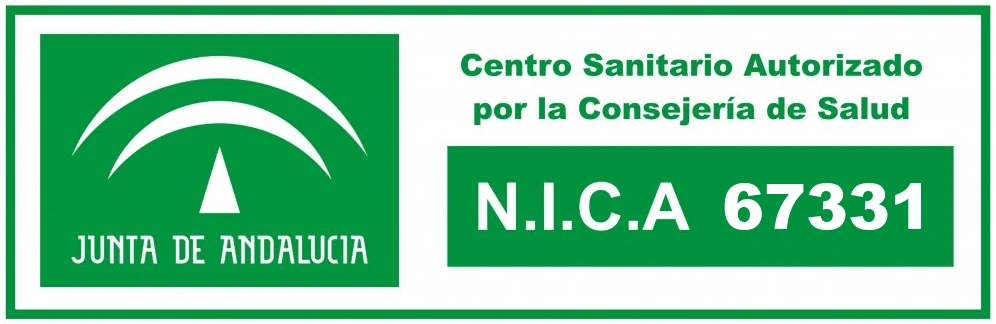
Registered health centre. Authorised by the Junta de Andalucía, N.I.C.A. 67331.