Home / Local treatment guides / Mallorca
Treatment options in Mallorca
Rehab in Mallorca: what is here if you live here
What rehab in Mallorca actually means for somebody who lives here: the public addiction units that run all year, how a foreign resident becomes entitled to use them, where the English-language provision stops, and when it is worth leaving the island for a month.
Stopping alcohol or benzodiazepines abruptly can be dangerous if you are physically dependent, and severe withdrawal can include seizures. Get medical advice before you cut down or stop. In a life-threatening emergency in Spain call 112. In the UK call 999, or NHS 111 for urgent advice.
Mallorca has a permanent, named addiction service that runs all year, and the reason it exists is the resident population rather than the visiting one. The public units run all year. Whether you can use them turns on being registered as a resident, not on your nationality. The English-language provision, though, is mutual aid and private practice rather than the public network. Sierra Recovery is not on Mallorca: we are in Humilladero, in Málaga province, on the mainland.
People arrive at this page from a lot of different searches: rehab Mallorca, drug and alcohol rehab Mallorca, alcohol rehab Palma, addiction help Mallorca, English speaking therapist Mallorca, detox Palma. What follows applies to all of them.
Speak to a clinician about treatment options from Mallorca
Confidential, no obligation, and no referral fee is paid to anyone for sending you here.
A resident island, not a resort island
Just under a million people live on Mallorca. The island's population reached 971,068 at the start of 2025, and across the Balearics as a whole 340,619 residents, 27.9 per cent of the population, were born outside Spain on the 2024 count. Separately, 18,374 UK nationals were registered as resident across the islands at the start of 2025, which makes the United Kingdom the fifth largest foreign nationality there, behind Colombia, Argentina, Morocco and Germany.
Those numbers are the explanation for everything in the rest of this page. Services follow permanent demand, and permanent demand is what a resident population of that size, a quarter of it born outside Spain, produces. It is why Palma supports a private psychology and psychiatry sector working in more than one language, and why an island this size carries an unusually dense English-language recovery network.
A cost is attached to the same fact. A resident community big enough to fund its own services is still small enough that everybody in it is two introductions from everybody else. Your accountant drinks with your neighbour. Being recognised on the way into an appointment is a real cost in a community this size, and the fear of it is one of the reasons people describe putting the first call off. That changes the answer for some readers and not for others, and we come back to it below.
Getting into the Balearic health system as a foreign resident
People who have lived here fifteen years routinely do not know whether they can walk into a public addiction unit. The answer has almost nothing to do with how long you have been here or which passport you hold. Four pieces of paperwork decide it.
Register on the padrón. Empadronamiento is registration with your town hall as a resident of that municipality, and everything else sits on top of it. The UK government's guidance on living in Spain puts it first for the same reason.
Establish your entitlement. If you work here and pay into Spanish social security, you have it already. If you are neither working nor drawing a pension, ask at the INSS about the convenio especial, the paid-in scheme for people with no other entitlement. If you draw a UK State Pension, request an S1 form from the NHS Business Services Authority and register it with the INSS, which then issues you a Spanish social security number.
Collect the tarjeta sanitaria individual (the individual health card) from your local health centre.
See your médico de cabecera (your GP). The GP is the usual referral route into the addiction units described in the next section, though the island units outside Palma can also be approached directly.
One thing to expect once you are in: the public route runs on referral and on a queue, and how long that queue is varies by area and by what you are referred for. Ask at the health centre what the realistic wait looks like where you live.
One correction, because it catches people every year: a GHIC or an EHIC is a visitor's card. The UK government's guidance on visiting Spain says as much and sends residents to separate guidance for living here. If Mallorca is your home, the card in your wallet from a holiday is not the thing that gets you seen.
If you are physically dependent on alcohol or on benzodiazepines, none of this comes first. Do not stop suddenly. Withdrawal symptoms in that situation can include seizures, so get medical advice before you cut down or stop. Unfinished paperwork is not a reason to wait.

Not sure which of these routes fits your situation?
A straight conversation with a clinician about what is worth trying first, and in what order.
The addiction services on Mallorca that are open all year
These are institutions with addresses, staff rotas and a place in the regional health plan.
IB-Salut, the Balearic health service, runs Unitats de Conductes Addictives (addiction units) inside primary care. In Palma that means UCA Ponent on Carrer de la Fàbrica and UCA Bons Aires on Camí de Jesús, plus UCA Jove for people aged fourteen to twenty one, which covers all of the islands. Each is multidisciplinary: doctors, psychologists, nurses and social workers. They treat substance use disorders and behavioural addictions including gambling, and they work with families as well as with the person using.
The Institut Mallorquí d'Afers Socials (the Mallorcan institute of social affairs), part of the Consell de Mallorca (the island council), covers the rest of the island through five territorial units at Sa Riera, Manacor, Inca and Calvià. Between them they handle detoxification, opioid substitution treatment, psychological work, psychiatric input where there are co-occurring conditions, and the unglamorous business of getting somebody back into housing and work. Referral can come from primary care, from social services or from a mental health unit, or you can approach them directly.
CRIDA is the immediate-response line run under the Balearic addictions plan, staffed by health, psychology and social-work professionals. It costs nothing to ring.
Projecte Home Balears has worked on the islands since 1987. It is a non-profit, and it runs the widest continuum available here: outpatient alcohol treatment, residential therapeutic communities, a detoxification centre, a day centre, behavioural addiction work and a separate youth track, across twenty nine facilities with a team of roughly eighty. In 2024 it passed a thousand people in treatment on a single day for the first time in its history. Ask what a place costs when you ring, because the funding model is not published.
All of it sits under the Pla Integral d'Addiccions de les Illes Balears 2025 to 2032 (the comprehensive Balearic addictions plan), published in March 2025, which is where the money is committed.
These are standing services with permanent staff, not seasonal ones.
Where the English-language provision stops
Conversational Spanish and clinical Spanish are not the same language. You can run a company in one and be unable to say anything true about yourself in the other, and this is the point on which the decision usually turns.
What exists in English here is genuinely good, and it is almost entirely mutual aid and private practice.
English-language Alcoholics Anonymous meets in Palma, Alcudia, Manacor, Port de Pollença and Magaluf. The Palma meetings run at the Anglican church on Carrer Nunez de Balboa and have done since the late 1970s, which is as good a measure of permanence as anything on this page: that room has been open for roughly fifty years. The Mallorca helpline is +34 634 368 771, a second number +34 623 994 744 is also listed, and the group takes email at palma@alcoholics-anonymous.eu. Current schedules are published by the Mallorca intergroup and in AA Spain's Balearic listing. Confirm current times before you drive across the island for one.
Al-Anon, for people living alongside somebody else's drinking, meets in English in Palma and runs two further meetings a week online. Online meetings have no season and no ferry timetable, which matters more in January than it sounds in July.
The Anglican chaplaincy holds congregations in Palma, Puerto Pollensa and Cala d'Or. It is not a treatment service and does not present itself as one, but it is the durable spine of English-speaking community life here, and it is where a lot of people ask their first question out loud.
Private clinics in Palma advertise psychological and psychiatric work in English and German. Treat that as a marketing claim until you have tested it: ask which clinician you would actually see, what they are registered as, and in which language they work.
The honest gap is the public network. None of the units listed above publishes anything about English-language capacity, and their material is in Catalan and Spanish. We could not establish whether an English-speaking clinician or an interpreter can be arranged. Ask when you ring, rather than assuming it in either direction, because both assumptions cost people months.
What the summer does to the route in
There is a wrong month to start this, and it is not the one people expect.
In May 2026 the Balearics held 1.86 million people at once, the highest figure recorded for that month. By July the health service was being reported as at breaking point: roughly thirty five patients a day waiting for admission at Son Llàtzer, Son Espases carrying dozens of unfilled nursing posts, emergency call-outs described as having tripled, and health centres in tourist areas working past capacity. The nursing union's position was that this is structural rather than exceptional.
Read that carefully, because it is not an argument about temptation. The part of the system that buckles in August is emergency and primary care, and primary care is the usual first door into the addiction units for anyone going through their GP.
The units are referral-based rather than seasonal in the way an emergency department is. Whether their own capacity moves with the season is something we could not establish, so we are not going to claim it in either direction.
The practical consequence holds regardless. If you have been waiting for a quiet moment to make the first appointment, the quiet moment on this island is January.
That applies to choosing a moment, not to needing one. If you need help now, ring now and take whatever the system can give you this week.
What the private sector on the island offers
Privately, and as far as published listings show, Mallorca has three distinct things.
There is a detoxification clinic in central Palma handling medically supervised withdrawal. Alongside it sits a private psychiatry and psychology sector, some of it working in more than one language, which is where most English-speaking residents end up first. And at the top of the market there is at least one single-client residential programme run from a private villa, aimed at an international clientele and priced for one. What the island is short of is licensed residential rehab in the middle of that range, working in English. What the word private actually means in Spain, and how to check any centre anywhere in the country, is set out separately.
On price, the island sits inside the Spanish luxury segment, where the distance between the cheapest and the most expensive residential option is very wide. What that segment actually sells, and where the money goes, is set out in our breakdown of luxury rehab in Spain rather than repeated here.
On licensing, the whole of what this page needs to say fits in two sentences. The Balearics keep their own health register under Decreto 100/2010, administered by the Conselleria de Salut (the Balearic health department), so any centre with beds on Mallorca has to appear on it. A registration issued by another autonomous community, ours in Andalusia included, carries no weight here at all.
Our Ibiza guide sets out how the Balearic regime works and what an authorisation does and does not permit. Our Marbella guide works through what a single register entry actually says, and the Málaga province guide lists every authorised addiction centre in that province.
Reasons a resident stays, and reasons a resident goes
Our bias is worth declaring. If what is on the island will hold you, use it. We would rather write that down than let you assume the recommendation is always a flight.
Reasons to stay. Entitlement, once established, costs nothing further to use and does not expire. The recovery network you would be coming home to is already here and has been for half a century. And if you have not yet tried the public route, trying it costs nothing but time, which makes it the only option on this page you can start tomorrow without paying for anything.
Reasons to go.
Language, first and most often. If the clinical work cannot happen in Spanish or Catalan, the best-funded provision on the island may simply not be usable by you. The service is not at fault for working in the language of the place it serves.
The size of the community, second. A meeting protects your name by design, and the rooms here observe that. A waiting room does not, in a city where the English-speaking community is small enough that people keep meeting each other.
Escalation. If outpatient support has been tried and did not hold, the honest next step is a residential programme, and residential capacity on Mallorca is thin and expensive.
The shape of the journey. People put off leaving an island because it feels like a larger act than it is. Palma to the mainland is under two hours in the air each way. It is a round trip, not a departure.
Want an itemised quotation before you commit?
We publish our price. Hospital detox and medical costs are billed separately and quoted up front.
Sierra Recovery is on the mainland, in Málaga province
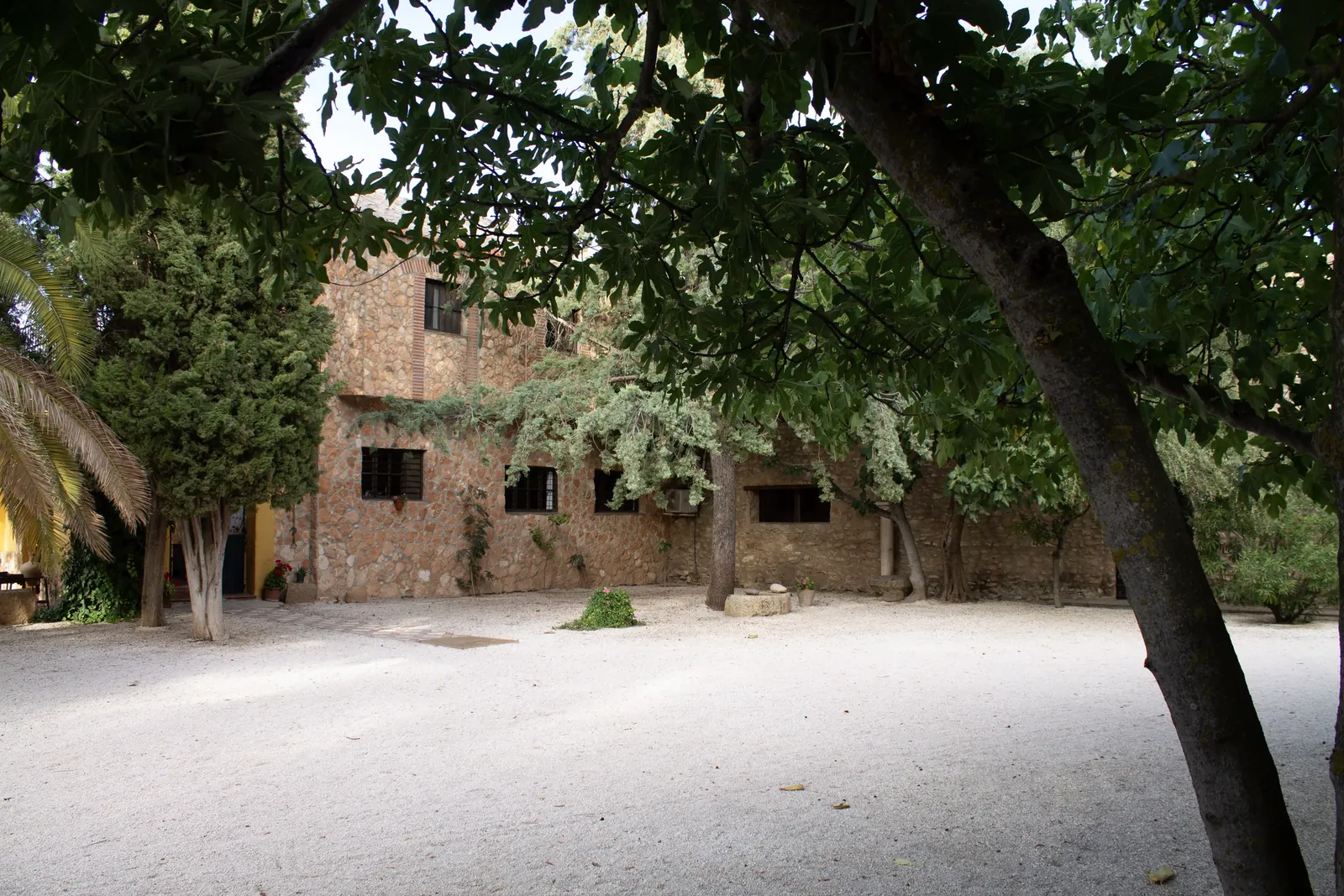
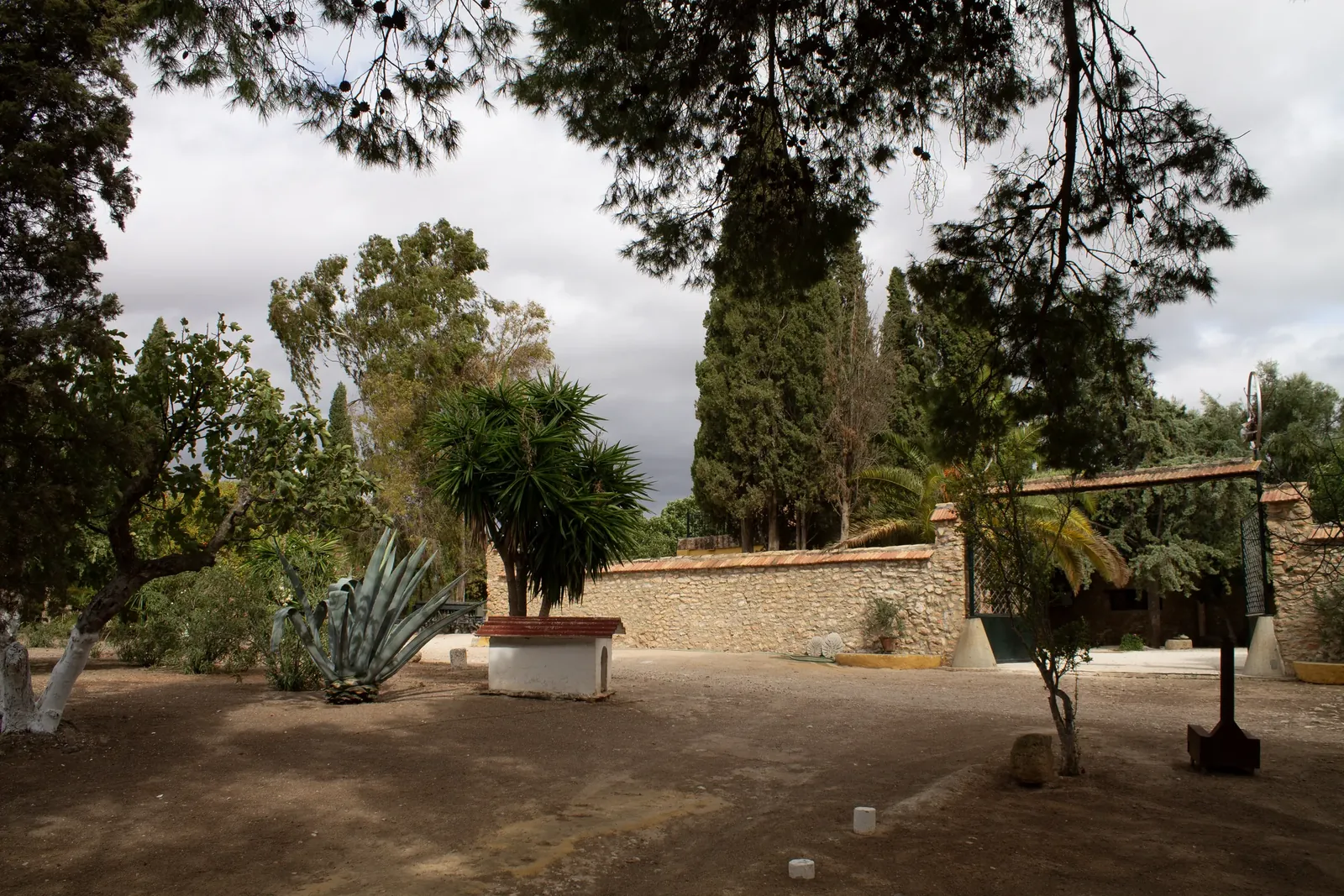
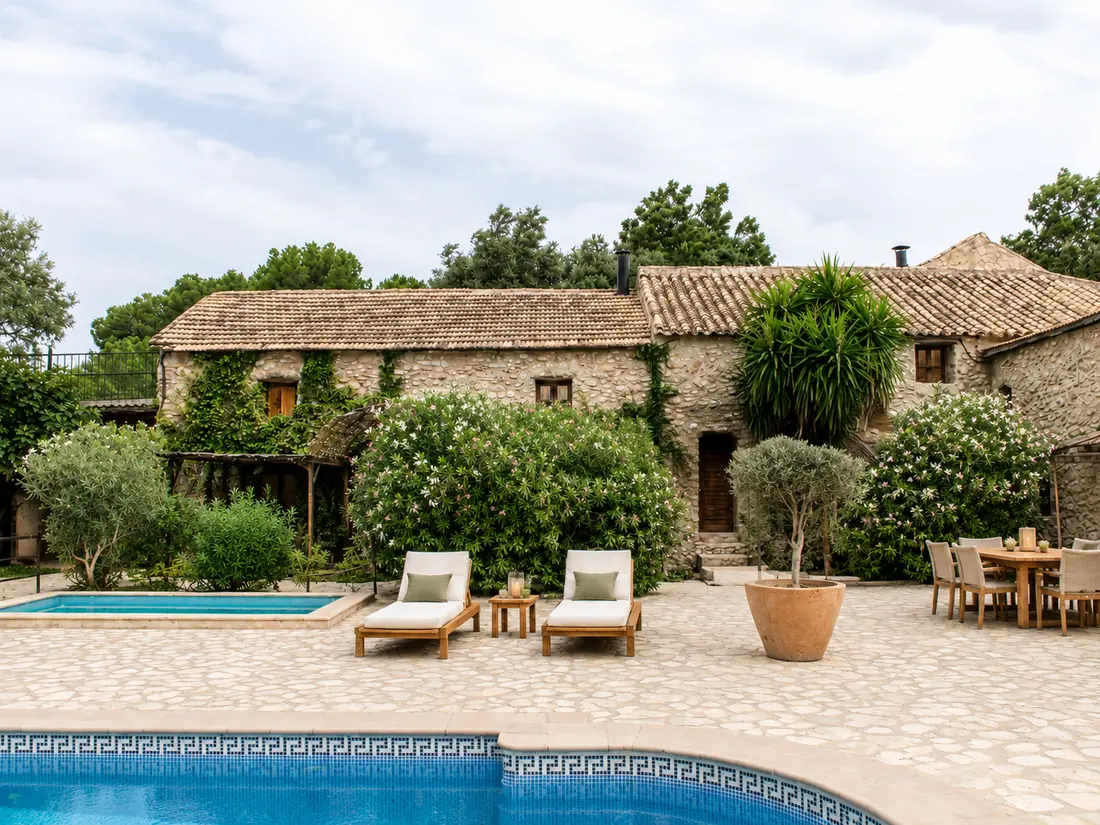
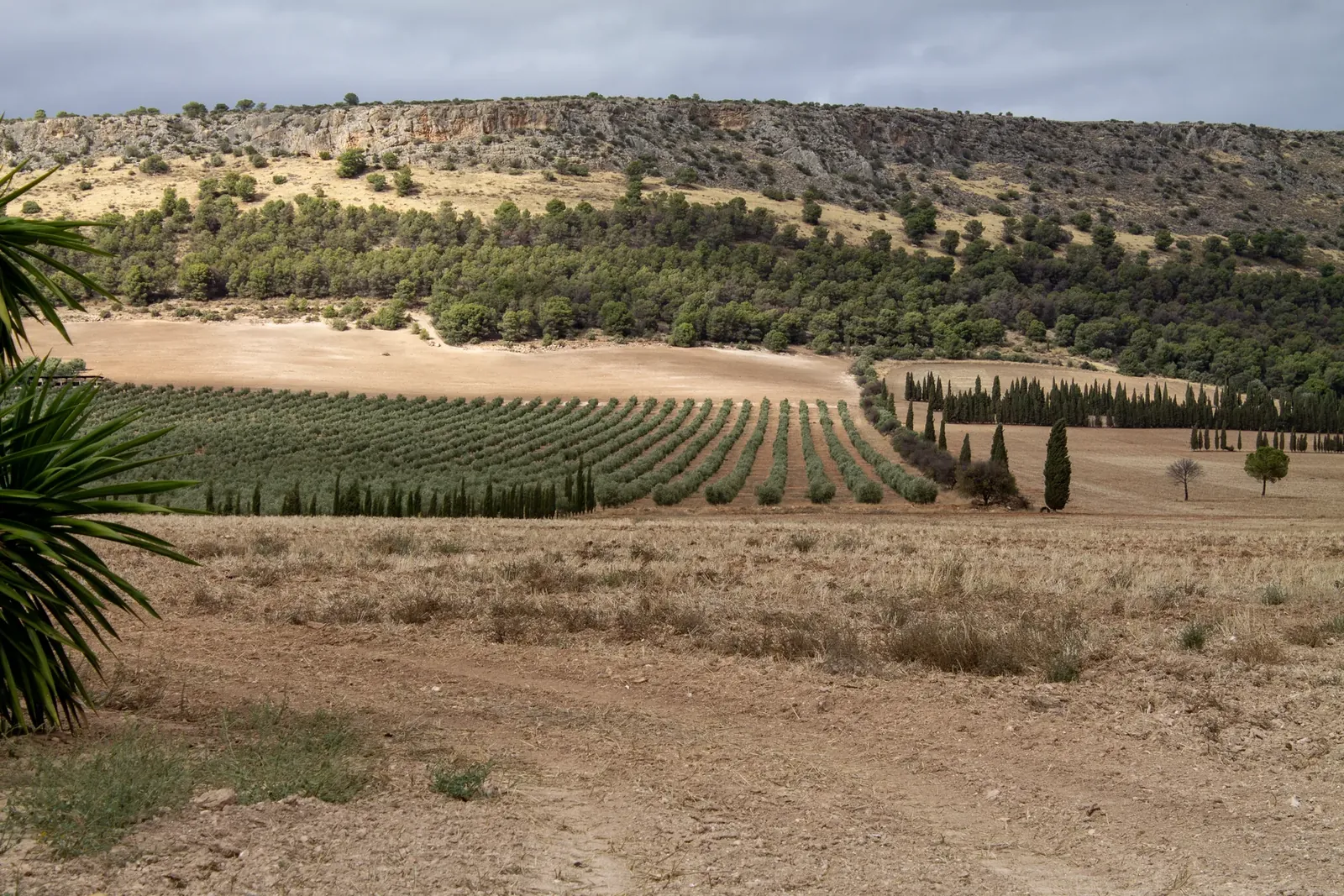
Sierra Recovery is not on Mallorca, and not in the Balearics at all. The centre is at Cortijo Ferradores in Humilladero, inland in Málaga province near Antequera, about forty five minutes by road from Málaga airport. One centre, no branches. The setting is a working cortijo, a rural retreat rather than a hospital ward.
From Palma it is a direct flight of roughly an hour and forty minutes, flown every day of the week and all year round. The ferries from Mallorca land at Barcelona, Valencia and Denia rather than anywhere in Andalusia, so flying is the only sensible route. What the journey involves is set out separately.
Because we are in Andalusia we sit on the Andalusian register, as N.I.C.A. 67331, under the care unit atención sanitaria a drogodependientes (healthcare for people with drug dependence). That authorises a registered health centre with a supervised treatment residence. Not a hospital, and not a detox unit. It also counts for nothing on Mallorca, the same rule in reverse. Look the entry up on the public register before you speak to anybody here.
Which is why detox, where clinically needed, is completed in an appropriate medical setting before admission and billed separately. Somebody who completes a withdrawal in Palma before flying is doing this in the right order, and we fit the admission date to what the treating doctor says is safe.
This is residential treatment in the ordinary inpatient sense: you live here for the month. The standard length of stay is twenty eight days. The programme runs five days a week, with three structured therapy groups a day, five group contacts a day once the afternoon activity and the day closing are counted, three individual sessions a week, and a seventeen-module curriculum. Cognitive behavioural therapy and REBT sit at the centre, with acceptance and commitment work, dialectical behaviour skills, EMDR, trauma and family work, holistic sessions including yoga, mindfulness and equine work, and a relapse-prevention plan settled before anyone goes home. Depression, anxiety, PTSD and burnout, where they sit alongside the addiction, are considered at assessment and worked into the same personalised plan, which is what dual diagnosis treatment means in practice. Where an eating disorder is the primary and severe condition, or where physical health needs hospital-level monitoring, this is not the right setting. Everything is delivered in English. The method is adapted from PROMIS Clinics, a separate United Kingdom company treating addiction since 1986, whose managing director is a partner here.
The published price is £9,900 for the twenty eight days, with a private room included. Detox, medical, psychiatric, laboratory and hospital costs and travel are outside it, and an itemised written quotation is issued before you commit to anything. No referral fee is paid or accepted, in either direction.
You would speak to Nerea Encinas Sánchez, who directs the centre and is a general health psychologist, rather than to a salesperson.
Coming back to Mallorca
The month away is the part everybody asks about. Month three, back at home, is the part almost nobody plans for.
Continuing care runs online after discharge, and with your consent we write to your GP, so that whoever picks you up here knows what was done and why. How aftercare works is set out in full separately.
What you come home to is the network described earlier, and the useful version of that sentence is a specific one: put a meeting in the first week back, rather than leaving it as something to find eventually. The public route stays open whether or not you went away, and leaving the island for a month does not close it.
This is not a house preference. NICE's guideline on alcohol-use disorders treats care coordination as part of routine care across the whole period of care, aftercare included, and recommends psychological work aimed at a person's social network and environment rather than at the drinking alone. On an island, your social network and your environment are unusually fixed. That is a disadvantage while you are using and an advantage afterwards.
So agree the plan for coming back before you fly out, not on the way home. Which clinician, which meeting, which day of which week.
Family can fly over for a family session and be home the same evening. From Palma that is genuinely possible, and it is one of the few practical arguments for treating on the mainland rather than further afield.
How to decide
Four situations, and what to do first in each.
Registered, and able to do this in Spanish or Catalan. Start with your GP and ask for a referral to the addiction unit covering your area. There is no reason to pay for anything yet.
Registered, but not able to do clinical work in Spanish or Catalan. Treat language as the deciding variable rather than as a detail. Get to a meeting this week, find a private English-speaking clinician, and judge the residential question once you have seen whether that holds.
Not registered. Start the padrón and the health card now, before you need either. It is the gate on every free option inside the public system, and the queue is not a place to be during a crisis.
Outpatient support already tried, and it did not hold. Or being recognised locally is the thing that has stopped you asking at all. Then the residential question is a real one, and it gets answered off the island.
Whichever of those you are, one order is fixed. If you are physically dependent, do not stop on your own, because withdrawal from alcohol or benzodiazepines can cause seizures. Medical advice comes first, supervised withdrawal in a medical setting comes second, and a programme comes after that and never before.
Sources and verification
- IB-Salut, the Balearic health service: the Unitats de Conductes Addictives in Palma · how the individual health card is issued
- Institut Mallorquí d'Afers Socials, Consell de Mallorca: the territorial addiction units at Sa Riera, Manacor, Inca and Calvià
- CRIDA, the Balearic immediate-response line · Pla Integral d'Addiccions de les Illes Balears 2025-2032
- Projecte Home Balears, programmes. Cost is not published; ask when you contact them
- UK government: healthcare in Spain, including the Balearic Islands · healthcare for visitors · living in Spain
- AA Mallorca intergroup · AA Spain, Balearic listing · Al-Anon Spain meeting list · Mallorca helpline +34 634 368 771
- Population figures from the Instituto Nacional de Estadística (the national statistics institute), as reported by the Majorca Daily Bulletin and Última Hora
- Summer pressure on the Balearic health service, reported August 2026
- NICE CG115, alcohol-use disorders: diagnosis, assessment and management
- Emergency numbers: 112 in Spain, 999 in the UK, NHS 111 for urgent non-emergency advice
- Junta de Andalucía register, Sierra Recovery, N.I.C.A. 67331 · Sierra pricing · Sierra licensing
All figures dated 10 August 2026. Service names, addresses, phone numbers, meeting times and prices change, so confirm each on the official page before you rely on it.
Questions people ask
Is there a rehab in Mallorca?
Yes, and more than most people expect. The island has public drug and alcohol units run by IB-Salut in Palma and by the Consell de Mallorca elsewhere, a non-profit running residential therapeutic communities and a detoxification centre, a private detox clinic in Palma, private psychiatry and psychology, and at least one single-client villa programme. What is thin is licensed residential capacity working in English.
Can I get addiction treatment free on Mallorca if I live here?
If you are registered with the Balearic health service, the public addiction units are available to you through the ordinary health system, referred by your GP. Entitlement follows residency registration rather than nationality, so the question is whether your paperwork is in order, not where you were born. The non-profit sector runs alongside it, and you should ask each service what it costs.
How do I register for the Balearic health service?
Register on the padrón at your town hall, then establish entitlement, either by paying into Spanish social security or, if you draw a UK State Pension, by requesting an S1 form and registering it with the INSS. That produces a Spanish social security number, which your health centre exchanges for a tarjeta sanitaria individual. A GHIC or EHIC does not do this job, because it is a visitor's card.
Is there addiction treatment in English on Mallorca?
In mutual aid and in private practice, yes. English-language AA meets in five towns, Al-Anon meets in Palma and online, and private clinics in Palma advertise work in English and German. The public units publish nothing about English-language capacity and their material is in Catalan and Spanish, so ask directly when you contact them rather than assuming either way.
Do the English-language meetings run all year?
The Palma meetings do, and the online Al-Anon meetings have no season at all. The Anglican church meetings have run since the late 1970s. Listings for the smaller towns move, so confirm current times through the Mallorca intergroup or on the helpline, +34 634 368 771, before travelling for one.
Is there a detox unit on Mallorca?
Yes. There is a private detoxification clinic in central Palma, and detoxification is among the services the Consell de Mallorca units and Projecte Home Balears provide. Sierra Recovery does not run detox. Where withdrawal needs medical supervision it is completed in an appropriate medical setting before admission here, and it is billed separately.
Should I treat on the island or travel to the mainland?
It usually comes down to language and to escalation. If you can do clinical work in Spanish or Catalan and outpatient support has not yet been tried, the island is the sensible first move and it costs you nothing. If language rules out the public network, or if outpatient support has already been tried and did not hold, a residential programme is the next step and it is easier to find off the island.
Does a Spanish licence from another region count on Mallorca?
No. Health authorisation in Spain is issued region by region, and a centre with beds on Mallorca has to appear on the Balearic register rather than on any mainland one. Our own Andalusian registration, N.I.C.A. 67331, has no standing here. Our Ibiza guide sets out how the Balearic regime works and what an authorisation covers.
How long does it take to get from Palma to the centre?
Palma to Málaga is a direct flight of about an hour and forty minutes, operated daily and year round, then roughly forty five minutes by road to Humilladero. There is no ferry from Mallorca to Andalusia, so flying is the practical option. A family member can come for a session and be home the same evening.
What support is there when I come back to Mallorca?
Continuing care runs online after discharge, and with consent we send a written handover to your GP. Locally you return to the mutual aid network and, if you want it, the public addiction unit for your area, which stays open to you whether or not you went away. The plan for all of that is agreed before you leave rather than after you get back.
Useful pages on this site
Related pages
Rehab in Ibiza · Rehab in Valencia · Rehab in Málaga province · Rehab in Marbella · Luxury rehab in Spain, what the segment costs · Private rehab in Spain and how to verify a centre · Travelling to Spain for treatment · Aftercare and discharge · Our regulation and licensing · All local treatment guides
 +
+
Talk to a clinician today
You will speak to our admissions team, English-speaking clinicians who know the programme and the people in it. Callback within 24 hours.
Registered health centre. Authorised by the Junta de Andalucía, N.I.C.A. 67331.